Lloyd’s of London, the world’s oldest insurance market, is expanding its African footprint with a new office in Casablanca, Morocco.
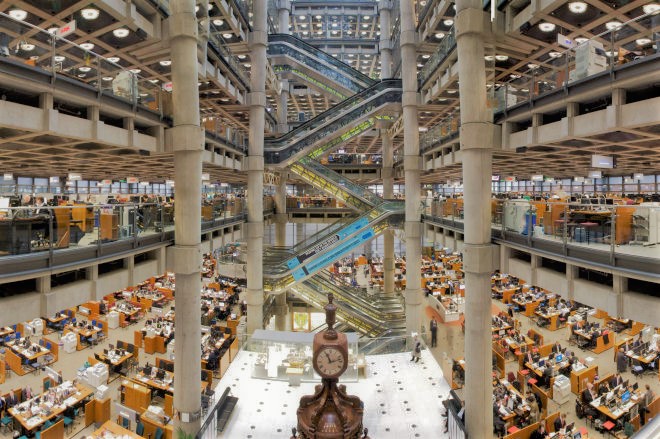
Inside Lloyd’s of London
After several months of negotiations, the insurance specialist managed to obtain the CFC status that allows it to operate in Casablanca Finance City (CFC), according to l’Economiste.
Launched in 2010 by the Moroccan Government to position, Casablanca, as a leading regional hub for international financial institutions, including reinsurance firms and brokers, wishing to access the fast-growing markets of Africa. In the model of French Paris La Defense, Casablanca Finance City initiative has been a success and now has joined other international financial centres on the Global Financial Centres Index as Africa’s top financial centre.
The CFC Status is a label that gives companies access to an attractive package of advantages including tax incentives, foreign exchange control facilities and other benefits for doing business facilitation.
Lloyd’s CFC status will allow Lloyd’s managing agents to delegate underwriting authority to intermediaries (third party coverholders or service companies).
Lloyd’s has appointed Salah El-Kadiri who will be promoting the Lloyd’s market, developing and strengthening Lloyd’s relationships and gathering market intelligence across the region.
Last year, Lockton was the first international broker to join the Casablanca financial hub when it set up an office to serve clients in the marine, aviation, energy and other industries with risk management, insurance and employee benefits consulting services.
Another insurer that viewed Africa as one of the important future growth markets is Allianz Group. After setting foot in Morocco with the purchase of Zurich Insurance unit last year, the Group recently obtained the status for its financial services subsidiary in Africa, Marofinac.
Morocco has capitalised on its proximity to Europe and developed a market-oriented economy supported by low labour costs, industry development strategies and free-trade agreements with the Eurozone, the US and neighbouring African countries.
Its insurance industry is one of the largest in the Arab region and only second to South Africa in the continent. And as such Casablanca has clearly been designed to serve as a springboard to financial companies wanting to take advantages of the growing African market opportunities, particularly those targeting the Greater North West Africa (collection of 28 countries).
A much needed market to prepare the British economy softens from the full impacts of leaving the European Union (EU), as a result of British electorate voting yes to Brexit last year.
“Africa’s strong demographic profile and wealth of natural resources present huge opportunities for its economies. Infrastructure and commerce are growing rapidly but require thorough risk management and mitigation to build resilience for the future. The complex risks that growing economies face need innovative, flexible risk transfer solutions,” said Salah El-Kadiri.
The massive WannaCry cyberattack on 12 May 2017 demonstrates the need to insure against the risks created in today’s interconnected online world.
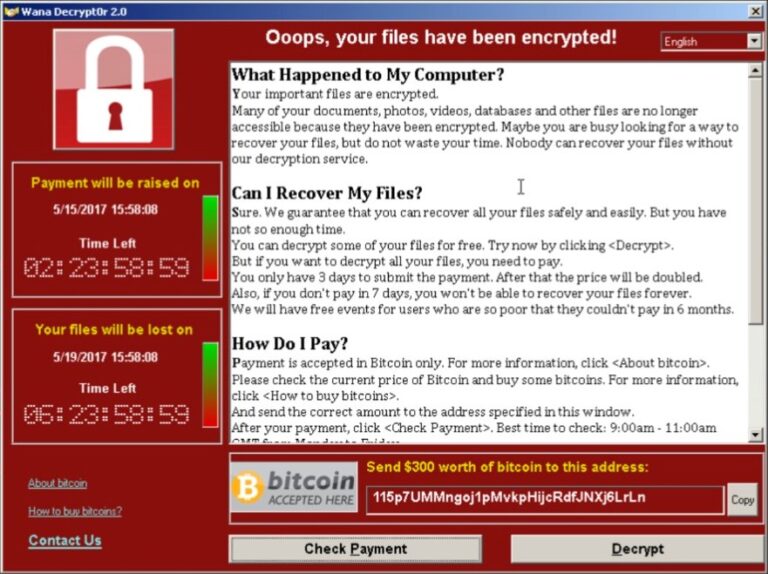
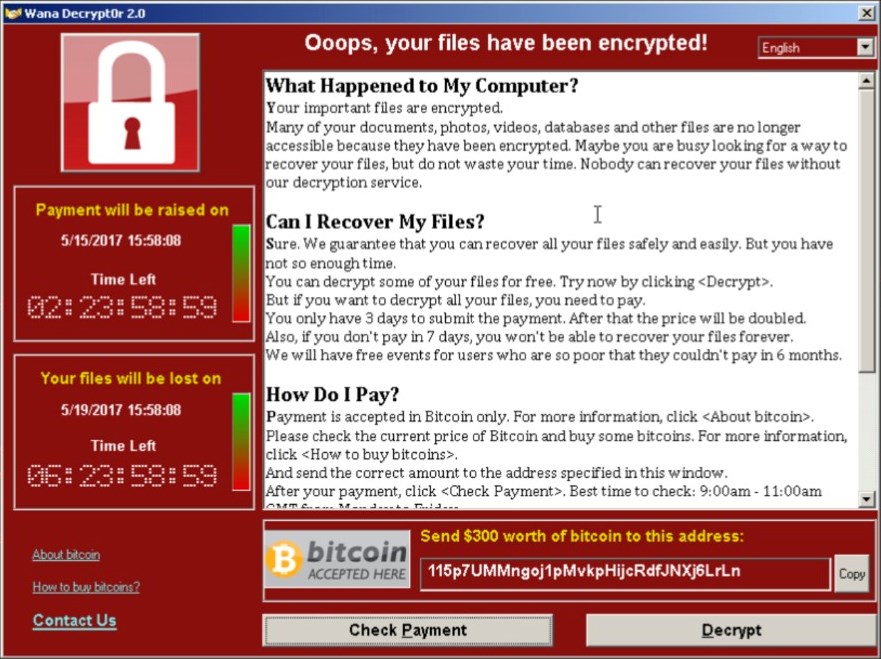
WannaCry – also known as WannaCrypt, Wana Decryptor and WyCry – is a ransomware that encrypts or scrambles the data on computers running on Microsoft Windows operating systems. The only thing the computer user sees is a screen demanding a $300 (£230) payment in bitcoin to decrypt the machine and free the data.
WannaCry screen: Oops, your files have been encrypted!WannaCry exploits weaknesses in Windows uncovered by researchers at the US National Security Agency (NSA). Those weaknesses were documented in a report stolen from the NSA by hackers and released online by WikiLeaks. Cybersecurity experts think ransomware bandits read the report and designed WannaCry to exploit those weaknesses.
The NSA is responsible for the WannaCry attack because it failed to share data about vulnerabilities with tech companies, Microsoft President and Chief Legal Office Brad Smith charged in a blog post. Smith believes that government cyberwarfare capabilities are a major risk because techniques developed by spy agencies often fall into the wrong hands.
“Repeatedly, exploits in the hands of governments have leaked into the public domain and caused widespread damage,” Smith wrote.
WannaCry affected more than 150 Countries
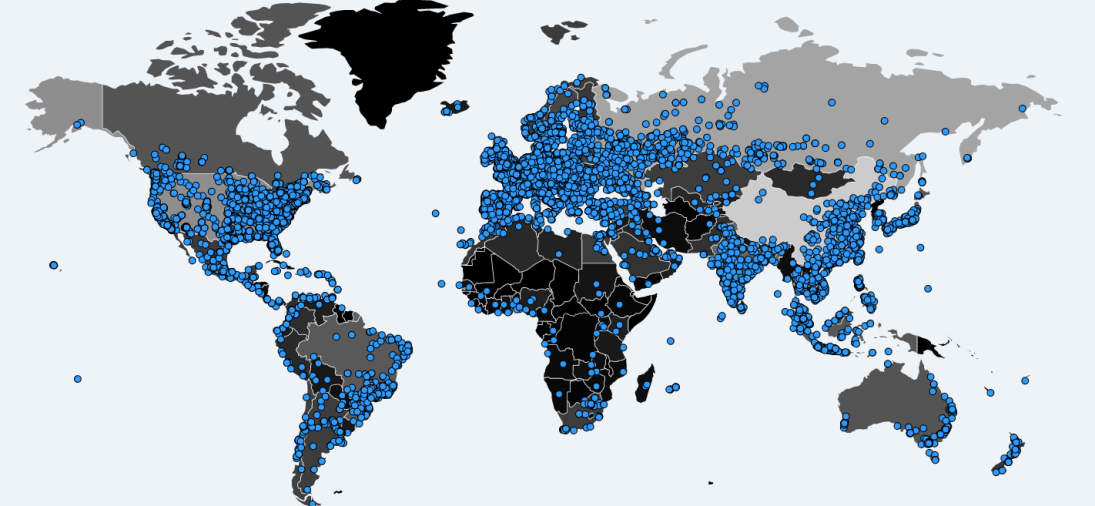
The WannaCry assault was one of the most extensive cyberattacks in history. WannaCry infected hundreds of thousands of computers in more than 150 countries. Victims ranged from a large portion of Britain’s National Health Service (NHS) to 40,000 businesses and organizations in China.
Companies affected by WannaCry included Hitachi, Renault, PetroChina and Nissan. There was also a risk to public safety in India where more than 100 systems of the police department in Andhra Pradesh were affected by the virus. Computers at the power utility in Balurghat Bengal were also infected by WannaCry.
World map showing countries affected by WannaCry ransomware – MalwareTech.com
In the United State FedEx customers were unable to track shipments because of WannaCry. Computers operating on old software such as Windows XP were most vulnerable to WannaCry. The NHS was infected because many of its systems rely upon XP. Chinese organizations were extremely vulnerable because many of them use bootlegged versions of Windows that lack the protections of the latest generation Microsoft products.
The WannaCry danger is far from over, cybersecurity researchers uncovered five imitations or variations of the ransomware in development on 15 May, Bleeping Computer reported. They even found a program called the Aron WanaCryptor 2.0 Generator that is supposed manufacture new versions of WannaCry.
Driving demand for cybersecurity
WannaCry exposes the risks of today’s interconnected world but it also reveals tremendous opportunities for insurers. American insurance companies wrote $1 billion (£770 million) in cyber insurance premiums in 2015, Fitch Ratings estimated.
Sales of cyber insurance policies might be worth $20 billion (£15.47 billion) by 2020, Fitch Ratings Managing Director James Auden toldInsurance Journal. The actual value of such policies might be far higher after high profile events like the WannaCry attack.
The largest writer of cyber coverage policies in 2015 was the American Insurance Group (AIG) which issued 16,418 policies worth $215 million (£166 million) in the United States in 2015, Fitch Data indicates. Other major players in the field include Chubb Limited, XL Group Ltd and Berkshire Hathaway Inc.
The amount of cyber insurance written is still limited because the profitability of the coverage is still unknown. Although events like WannaCry and the 21 October 2016 attack on major US websites including PayPal, Netflix and Amazon by the Mirai botnet might increase the profitability by raising awareness of the risks.
The biggest obstacle facing issuers of cyber insurance is the difficulty in evaluating cybersecurity measures. Even though worldwide spending on cybersecurity is expected to reach $1 trillion (£770 trillion) by 2021 it is often impossible to gauge its’ effectiveness.
Serious holes remain in many networks including obsolete software, fraudulent and ineffective security products and a worldwide shortage of cybersecurity professionals. Organizations are struggling to fill one million cybersecurity job openings a labour shortage that will grow to 1.5 million by 2019, Cybersecurity Ventures reported.
These security shortcomings will increase the demand for cyber insurance and the potential risks to insurers. Risks include massive claims and expensive litigation over cybersecurity claims.
Another major risk to insurers is the massive investment in cyberwarfare capabilities by governments in the United States, United Kingdom, China, Russia and elsewhere. The WannaCry attack demonstrates how easily official cyberweapons can fall into the hands of criminals and terrorists.
WannaCry demonstrates that cyber coverage will be one of the fastest growing and riskiest segments of insurance for the foreseeable future. Expect many new companies to enter the cyber insurance market, and new kinds of policies to appear in the future. Also expect to see major spikes in sales of cybersecurity policies whenever a big cyberattack occurs.
Allegations of election hacking in the United States have exposed the vulnerability of modern political systems to outside interference. The reaction to the hacking allegations has also exposed the serious risks that such interference poses to social and political order.
Donald J. Trump’s surprise victory in the United States demonstrates that electoral hacking can be effective in disrupting political systems. The Trump victory has effectively thrown both major political parties in the United States into chaos, and it may lead to dysfunctional government by creating gridlock in Congress.
Nor is the danger just confined to the United States, Sebastien Pietrasanta, the head of security for France’s Socialist Party admitted that he is frightened of cyberattacks in a Politicointerview.
Pietrasanta pointed out that the democratic process itself is the weakest link in the political system. The openness that democracy requires leaves it uniquely vulnerable to outside interference.
How electoral hacking works
Election hacking is actually a catch-all phrase that refers a variety of strategies used to undermine the political process. These strategies include:
Direct cyberattacks on political parties and institutions. This can include data theft, malware and ransomware.
Leaking of damaging or embarrassing information. Hillary Clinton’s campaign was fatally weakened by the release of Democratic Party emails exposing questionable behaviour and possible corruption among her staff. More recently President Trump himself has been the victim of a questionable dossier of information “leaked” by his enemies inside the American intelligence community, and promoted by his critic US Senator John McCain (R-Arizona).
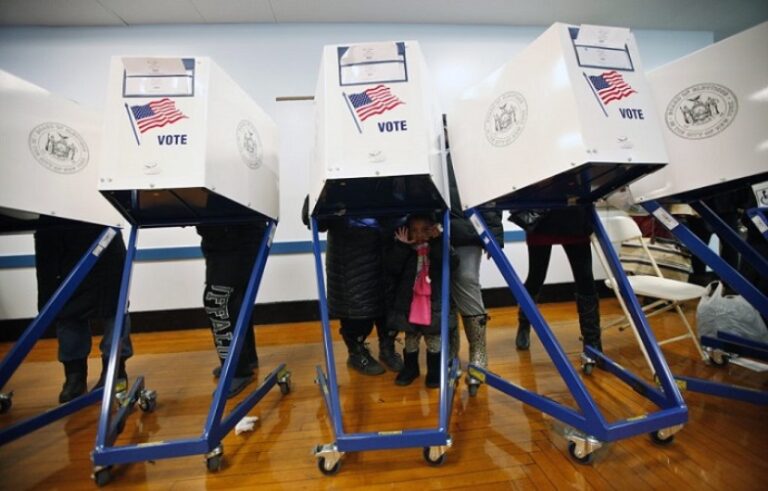
Deliberate interference in the political process such as vote fraud and voter suppression.
Attempts to undermine the credibility of the electoral process. An example of this was Russian efforts to hack into American voter registration databases before the election. The idea is to make citizens suspect their leaders are not legitimately elected. Another is to raise questions about electronic voting machines or paper ballots.
Manipulation of the electoral process itself. In the United States this often takes the form of demands for recounts, and allegations of vote fraud and voter and suppression. The idea is to make citizens think the process is rigged against them and in favour of some shadowy elite.
Fake news. Propaganda and smear campaigns disguised as news stories. A popular means of spreading this false websites. Other means include social media, open-sourced platforms such as Wikileaks and the leaking of documents to journalists.
The risk of civil unrest
The biggest risk created by electoral hacking is that of civil unrest. Trump’s victory triggered riots and protests in the United States right after the election.
Rioting; including the burning of a $90,000 limousine outside the White House, accompanied Trump’s inauguration ceremony on the 20th January . The words “We the People” and anarchist symbols were spray painted on the limo before it was torched, The Washington Postreported. The vehicle’s windows were smashed and the driver injured before the arson.
Civil unrest – rioters burning limousine in Washington DC
The rioters who attacked the limo also threw rocks at police who responded by throwing flash-bang grenades. A flash-bang grenade is a military weapon developed for the Special Air Services, which can set a building on fire.
Disturbingly the owner of the burned limousine Muhammad Ashraf did not know whether his insurance will cover the mayhem, The Post reported. Donald Trump himself was one of the customers of Ashraf’s limousine service before he launched his presidential run.
It is not clear whether the rioters knew of Ashraf’s relationship with Trump but the attack should concern business owners and insurers. New kinds of coverage might be needed for businesses that operate in capitols or areas near government buildings such as the Houses of Parliament.
The risk of civil disobedience
Another danger is that of civil disobedience which can lead to violence or property destruction. Protesters chained themselves to the doors at Uber’s headquarters after media reported the company’s CEO Travis Kalanick had been pointed to the Strategic and Policy Forum an advisory body to President Trump.
These dangers are magnified by large scale protests such as the Women’s March on Washington that may have attracted 470,000 people to the nation’s capital. Media reports indicate that speakers such as Madonna deliberately tried to incite violence with incendiary language during the march.
Madonna speaking at the Women’s March in Washington
There were also shouting matches between protesters and radical Christian street preachers that nearly led to violence during the march, The Christian Postreported.
The riots, the Women’s March and the Uber protest were all triggered by the widespread belief that Trump somehow stole the election through hacking. The belief is reinforced by politicians like US Representative John Lewis (D-Georgia) who has publicly called Trump an illegitimate president.
The Risk of Dysfunctional Government
Beyond civil unrest there is the risk of ineffective or dysfunctional government. A danger in the United States is that some members of Congress such as Lewis will refuse to cooperate with the Trump administration.
This can lead to a US government shut down by preventing Congress from passing a federal budget and appropriating money for government operations. This actually occurred in 2013 and it nearly happened again on the 9th December 2016, Politico reported. The shutdown almost occurred because Democrats objected to a plank in the majority Republicans’ budget proposal.
Now that a President who is widely viewed as illegitimate is in office, such a shutdown is more likely. Some members of Congress may fear that they will be viewed as traitors by voters if they are seen helping Trump. The risks from a shutdown include a suspension of necessary government services and civil disorder.
The Threat is World Wide
The situation in the United States proves that electoral hacking is a grave threat to every nation with a democratic government. Insurers need to monitor the situation because what happened in America might soon be reported in other nations such as France and Germany.
Chancellor Angela Merkel thinks the Russians might target her by interfering in the next German election, Politicoreported. One result of such interference might be that the Germans retaliate by hacking the next Russian election.
Electoral hacking is a threat that extends far beyond the political process. Everybody in insurance and risk management needs to be aware of it and prepared for the side effects.
Donald Trump slammed CNN reporter for “fake news” during his press conference few days ago. The now-President took aim at CNN as well as BuzzFeed for releasing an unverified and very questionable dossier on their websites.
Indeed, proliferation of fake news online is becoming a serious risk within the political establishments and it is now affecting a wide range of organisations. Companies, government agencies, charities, religious associations and even small businesses are all at risk from false news stories.
Examples of the havoc that can be wreaked by fake news abound, but a few recent news stories highlight the problem and the risks it poses.
Food manufacturer Ferrero SPA’s sales were threatened when the fake headline “Nutella may cause cancer” went viral. The headline was based on a misreading of a press release from the European Food Safety Authority (EFSA) about a study of the potential carcinogenic properties of palm oil. Palm oil is one of the ingredients in Ferrero’s popular chocolate spread Nutella. Disturbingly the EFSA press release did not even mention Nutella but it still generated a sensational story with a hysterical headline.
Fake news can lead to violent or criminal actions by demented or confused individuals. Pizzagate a notorious phony news story about a child prostitution ring in a Washington D.C. pizza parlour was widely believed in the United States. It led one man, Edgar Welch, to invade a pizzeria and threaten innocent people with a gun in an effort to save imaginary victims. Another man was recently arrested for making threatening phone calls to the same pizzeria, Comet Ping Pong.
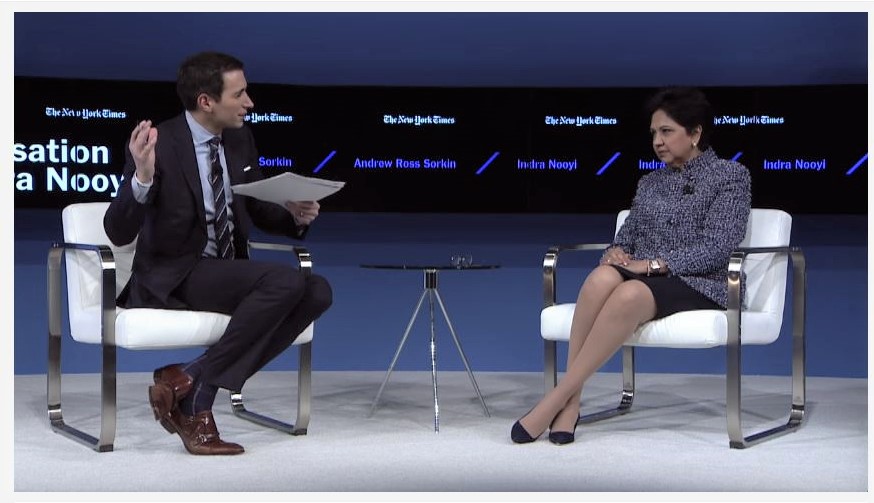
Fake news has inspired real-life boycott efforts. Supporters of American President Donald Trump threatened to boycott Pepsi Co products because of social media posts that contained fake statements attributed to the company’s CEO Indra Nooyi. Social media charged that Nooyi had said she did not want Trump supporters business. The news was based on comments Nooyi had made at conference, in the real statement she never mentioned Trump’s name and urged support for the president-elect.
Indra Nooyi speaking with Andrew Ross Sorkin at the Dealbook conference in New York
Some protestors set New Balance shoes on fire in the United States, after claims that the footwear was the official shoe of the “White Power Revolution,” went viral. The claims were prompted by a vague statement made by New Balance Vice President of Public Affairs Matt LeBretton. LeBretton merely said “things are going to move in the right direction” after Trump’s election victory, CNN reported. He never mentioned “white power” which is a euphemism for racism.
And in another case, Delta Airlines was hurt by a prankster who claimed he was thrown off a flight because he spoke Arabic. The joker made the claim, which was apparently false, in a YouTube video that went viral.
Real risk from fake news
Recent events demonstrate that false and exaggerated news stories can create very serious risks in the real world. Fake news is an old phenomenon, but its danger is greatly magnified by the way such stories spread online.
False news stories spread fast because they are often more popular than real news. The top 20 fake news stories on Facebook received more likes, shares and comments than the top 20 accurate news stories, data cited by Business Insider indicates. One reason for this is that false news often caters to popular prejudice or particular points of view.
The creators of fake news stories often pander to popular prejudice and misconceptions. During the US Presidential campaign claims that left-wing protestors were being bussed to Trump rallies went viral, even though the claims were unsubstantiated, The New York Timesreported. The story spread because it pandered to popular scepticism about protestors in the United States.
Likewise, the false stories about Nutella play to popular hysteria about manufactured and artificial foods. This indicates that people that hold strong beliefs about something, more are susceptible to fake news.
There is also some evidence that professional marketers are deliberately manufacturing phony stories to increase website traffic. Such fraudsters carefully research stories, and they know how to target the news to the most susceptible audiences.
Can you insure against fake news
The short answer is “Yes”.
Nonetheless, the risks created by fake news might actually boost the reputation insurance products of the risk management industry.
“Fake news is merely one more stressor on a company’s reputational value,” CEO Nir Kossovsky of Steel City Re said to Insurance Business Magazine. His company provides corporate reputation measurement solutions. He also added that it is a segment of the industry that is booming, largely because of social media.
The obvious opportunity would be special coverage for companies that are highly susceptible to damage from phony stories. That might include consumer products and entertainment companies.
Another would be liability coverage for organisations that might inadvertently spread fake news. That might include social media companies like Facebook, search engines and possibly legitimate news organisations.
A final opportunity might be a policy designed to cover damage inflicted by targeted false news stories. An example of that might be fake articles designed to drive down a company’s stock price or hurt its sales.
Such policies would require standards for news and improved methods of authenticating news stories. Since even professional journalists often have a hard time differentiating hoaxes from news that can be difficult.
Fake news is a very real risk that the insurance industry is going to have to deal with. Like other risks it poses both an opportunity and a threat for insurers.
Eurasia Group, the world’s largest political risk consultancy, released their annual forecasts for 2017. The consultancy proclaims that we are entering a period of geopolitical recession.
“This year marks the most volatile political risk environment in the post-war period, at least as important to global markets as the economic recession of 2008. It needn’t develop into a geopolitical depression that triggers major interstate military conflict and/or the breakdown of major central government institutions. But such an outcome is now thinkable, a tail risk from the weakening of international security and economic architecture and deepening mistrust among the world’s most powerful governments.”
And the recession starts with …
1. Independent USA
Donald Trump’s pledge to make ‘America great again’ is built on the nation’s first core value: Independence. As the leader of the most powerful country, Trump wants to use that power in service of US national interests by turning the tables on key economic actors.
Existing and future alliances and treaties will be managed as business-like arrangements that result in “win-win” outcomes. This also signals the end of Pax Americana in which the US played a major role in promoting democracy, civil rights and rule of law around the world. All of this is bound to create several areas of political risk.
2. China overreacts
China’s scheduled leadership transition will shape its political and economic trajectory for the years ahead.
In autumn 2017, China’s President Xi Jinping will further consolidate his power and will be extremely sensitive to external challenges to his country’s interests at a time when all eyes are on his leadership.
3. A weaker Merkel
Germany’s Chancellor Angela Merkel has faced a series of challenges that undermined her leadership. First, a refugee policy that backfired badly at home and throughout Europe when she invited refugees and immigrants to come to Germany which led to an uncontrolled mass migration.
Secondly, a number of corporate crises involving major German companies such as Deutsche Bank, Volkswagen and Lufthansa. And finally, the rise of populism in key countries that diminish support for her dream of a stronger Europe.
With the UK Brexit, Italian’s ‘No’ referendum, French elections almost guaranteed to have a President friendly to Putin and a Trump keen on resetting US-Russia relations. Merkel will see her geopolitical influence fast eroding day by day.
4. No reforms
Governments in both developed and emerging economies will avoid structural reforms. Some national leaders will hold or postpone any efforts to reform because of their political calendar.
For instance, France will not make any changes to its economy and will wait until after April’s national elections. China will do the same in preparations of the leadership shuffle. In the UK, the political class will be absorbed and preoccupied by the Brexit that will prevent it from any genuine reforms.
Other group of nations in which their leaders will feel as though they’ve already done enough. In India, Narendra Modi will be resting on his laurels after passing the goods and services tax, deregulating business and important efforts to improve the governance of public sector banks.
5. Middle East
Economic growth and efficiency is partly driven by technology. However, in the Middle East technology is also exacerbating political instabilities.
The energy sector, which most Middle East rulers depends on to provide the social contract with their people, is being challenged by new technological advances such as fracking in the US.
The Internet is also driving massive changes in the region. Once seen as a catalyst for progress, the new tool of communications is causing second-hand effects by enabling “forced transparency” on governments. This creates risks as Middle East rulers need secrecy to maintain their stability.
6. Central Banks get political
Central banks in the developed countries face greater pressures for the first time in decades, as politicians now scapegoat banks for domestic economic problems. In the US, there’s risk of an open conflict between the Federal Reserve and the White House over the country’s economic trajectory.
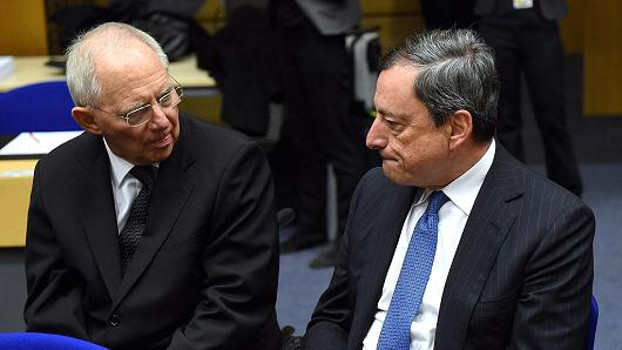
In the Eurozone, the risk is that the European Central Bank (ECB) will not have the political support needed to rescue the ailing economies of peripheral states the next time the continent faces a shock.
Wolfgang Schaeuble talking to Mario Draghi at ECB meeting
Theresa May has blamed the Bank of England for low-rate policies that she says have hurt “savers” and increased income inequality.
These attacks represent a risk to global markets in 2017 by threatening to upend central banks’ roles as technocratic institutions that provide financial and economic stability.
7. White House vs Silicon Valley
Technology leaders from California, the major state that voted in largest numbers in favour of Hillary Clinton in the election, have a bone to pick with the new president. Trump’s political agenda leads with national security, while Silicon Valley’s core ideology centres on freedom and privacy. Trump wants jobs, while Silicon Valley is driving workplace automation.
Though It’s not all open warfare as Trump is keen on supporting businesses by introducing corporate tax reform and more streamlined government regulations. This will be welcomed by business leaders in Silicon Valley.
8. Turkey
Since last July’s failed coup, Turkish President Erdogan has continued seizing controls and tightening his powers on many areas of the country. From judiciary, bureaucracy, media to even business sector through waves and arrests and purges.
This will risk increasing many of the existing pressures on Turkey’s domestic governance, economy, and foreign relations.
9. North Korea
The North Koreans have substantially advanced their nuclear and missile programs and are set to expand them further. And they are getting closer to mastering warhead miniaturisation technology, and thus possessing an intercontinental ballistic missile capability that could strike the West Coast of the US with a nuclear weapon. US policymakers consider this a red line.
For the past decade, North Korea has been a problem but not a significant risk. That changes in 2017.
10. South Africa
South Africa has seen political infighting over the last year as President Jacob Zuma clashed with opponents within and beyond the ruling African National Congress.
The infighting will undermine the country’s traditional role as a force for regional security. The leadership failure is deepening at exactly the wrong time because events in coming months will challenge regional stability.
What were they thinking? Was there a Risk Officer on the LinkedIn ship … it’d appeared not.
Earlier last month and after several warnings the Russian communications regulator, Roskomnadzor, ordered internet service providers to block access to LinkedIn after a court ruled that the social networking website was guilty of non-compliance with recent legislation on personal data storage.
Was LinkedIn really asking for it or simply complacent in the risk management of its overseas’ operations? Clearly there were some failings and perhaps non-compliance from foreign governments was probably not a top priority for LinkedIn. Well, this case reinforces the facts that the consequences of non-compliance are very serious risks for any business.
In summer 2014, the Russian government passed a legislation mandating the “local storage” of information related to its citizens. In simple terms – if a web service provider holds the information of a Russian citizen, they are required to maintain this information on Russian-based servers. And for the majority of web service providers who did not have servers within the country then it presented a problem.
From the perspective of Russian protectionists – the law makes sense.
For instance, the majority of Facebook servers are located in the United States, the NSA and other US government intelligence agencies have the convenience of proximity when attempting to access this information. By requiring companies like Facebook to house the personal data of Russians on Russian-based servers, the Kremlin is enhancing its ability to access and utilise that information.
In addition to the national security rationale, there is an economic incentive for Russia to pass this legislation. Large data centres, like the ones used by LinkedIn, are expensive to build and even more costly to maintain. By requiring this domestic IT development, Russia is working to ensure they remain relevant in the modern economy.
Russia shuts LinkedIn down
The recourse for not following this legislation is clear. Firm’s that do not abide are at risk of having access to their websites shut down by Russia’s state communications agency, Roskomnadzor.
In 2016, after months of working with LinkedIn to comply with the new regulation, Roskomnadzor took LinkedIn to court alleging that the firm had failed to comply with the law and consequently Internet access to their site should be terminated. Following several rounds of court proceedings, a Russian court upheld the charge by Roskomnadzor that LinkedIn was in violation of the new law and as such, access to the site should be blocked.
The immediate reaction from the global community was outrage. How can Russia block access to a public website?
Maria Olson, spokeswoman at the US Embassy in Moscow speaking to Reuters said that “The United States is deeply concerned by Russia’s decision to block access to the website LinkedIn,” and added that Washington urged the Russian authorities to restore access immediately to LinkedIn as the restrictions harmed competition and more particularly the Russian people.
For its part, LinkedIn has already spent a considerable amount of money on Russian legal fees. Following the loss of this court case, the company now needs to develop a contingency plan for Russian based servers.
Microsoft comes to the rescue
As mentioned previously, the cost of building and maintaining modern server farms can be drastic. And LinkedIn has been struggling since April 2015 when it bought the online learning portal website Lynda.com for $1.5 billion (£1 billion). To make things worse, the company announced lower earnings than expected in February 2016 which sent a shock wave across the financial markets wiping $10 billion off its stocks value.
However, few months later the company managed to sign a strategic deal with the behemoth software company Microsoft that could relieve its financial worries. The Russian agency is now in negotiations with the US software giant to find solutions to restore LinkedIn website access and resume operations within the country.
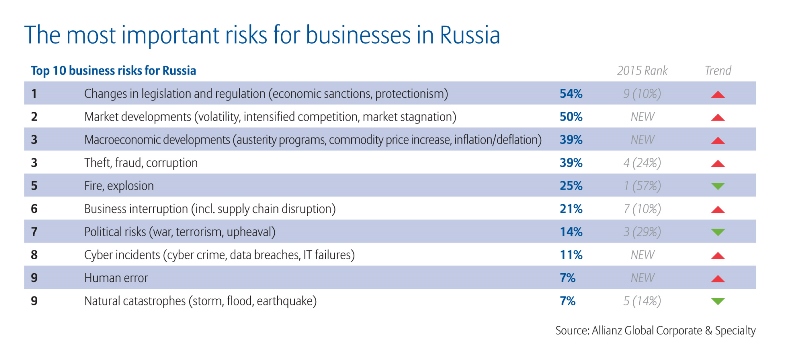
According to the Allianz Risk Barometer 2016 which surveyed over 800 risk managers and insurance experts from more than 40 countries, the most important risk for businesses in Russia is Changes in legislation and regulation
Top 10 business risks for Russia – Allianz
Since the Snowden revelations of global mass surveillance of states officials and ordinary citizens by the US government agencies, many countries including Russia have been vocal about the potential threat to the privacy of its citizens.
Even the European Union has invalidated the ‘Safe Harbour’ agreement that was signed with the United States Department in 2000 as a means to ensure necessary protection for European individuals whose personal data is transferred from the European Economic Area to the US.
This has been replaced by the EU-US Privacy Shield that provides stronger obligations on US companies that collect personal data.
Since Vladimir Putin re-election, Russia has been increasingly putting protectionist policies and this is reflected in the Global Risks Report 2016 which states that “States establish further controls over the internet, sometimes in collaboration with allies, building their own capabilities in data storage, search, and infrastructure – and using security threats and the promise of better public services through big data to win popular support.”
Furthermore, LinkedIn having a relatively small executive team and not employing a Chief Risk Officer did not excuse the company to have failed to deal with the Russian government data protection laws.
It appears that Mike Gamson, Senior VP of Global Operations and Mike Callahan, VP and General Counsel, underestimated the Russian business risk.
Firms should be prudent to closely watch the LinkedIn situation and take this warning seriously from the World Economic Forum. As the global business landscape continues to change, well researched firms with solid risk management strategies will be ahead of the pack.
The collapse of Deutsche Bank, an institution with a little over $2 trillion in assets is the greatest potential risk to the world’s financial system. The bank’s low level of capital and trouble raising money in the market has fuelled media speculation that is about to collapse.
The biggest threat is Deutsche Bank’s leverage ratio which dictates its ability to cover potential losses. Thomas Hoenig, Vice Chairman of the United States Federal Deposit Insurance Corporation (FDIC), estimated that Deutsche Bank’s leverage ratio was 2.68%. That is about the half the ratio of the biggest American banks such as Wells Fargo and JPMorgan Chase.
Hoenig thinks Deutsche Bank is riskier because it is heavily exposed to derivatives, Bloomberg reported. His critique echoes that of the International Monetary fund which labelled Deutsche as the greatest risk to the global banking system in June. At the same time America’s central bank the Federal Reserve described Deutsche Bank as a significant risk to financial stability.
Deutsche Bank’s woes keep adding up
Deutsche Bank is not meeting the European Central Bank’s (ECB) minimum requirements for financial strength, Credit Suisse Analyst Jon Peace charged on the 16 September. The ECB requires banks to meet a minimum capital ratio of 12.25% – Peace estimated Deutsche Bank’s ratio was below that.
More disturbingly Deutsche Bank’s US unit failed the Federal Reserve’s stress test for financial stability in July 2016 but passed a similar test from the ECB. The German government has added to the uncertainty, the newspaper Die Zeit claimed the country’s Finance Ministry was developing a contingency plan for Deutsche Bank’s collapse. The Ministry stated it had no such plan in a press release.
The market has certainly lost faith in Deutsche Bank its shares were trading at just $13.09 in New York on 30 September 2016. That price is 65% below the level achieved in July 2015, CNBC noted.
An even greater worry is Deutsche Bank’s revenue which fell by $9.39 billion between June 2015 and June 2016. That drop was compounded by the banks losses it reported a negative net income of -$8.746 billion for the second quarter of 2016.
A final problem at Deutsche Bank is a $14 billion fine it faces from the US Justice Department. The fine stems from the institution’s role in the sale of mortgage-based derivatives before the American financial meltdown of 2008.
One obvious problem here is that Deutsche Bank may not have the money to pay the fine. That means it may to negotiate a new settlement with the American government or restructure to pay it.
Deutsche is trying to funds by selling assets including Abbey Life and a $3.9 billion stake in a Chinese lender. Unfortunately it is not clear how much money the bank can raise by selling assets.
Deutsche Bank next Lehman Brothers
The only good news about Deutsche Bank is that most observers do not think its collapse will trigger a financial crisis like that of 2007-2008. Allianz chief economic officer Mohamed El-Erian assured American TV viewers that Deutsche Bank is not a “Lehman moment.”
Deutsche Bank is not insolvent like Lehman Brothers, El-Erian believes. Instead, it is undergoing a crisis of confidence like that which befell Bear Stearns in 2008. Unlike Lehman, which collapsed completely, Bear Stearns was simply absorbed by JPMorgan Chase.
The consensus on Wall Street is that the only way Deutsche Bank would collapse is if the German government or the European Central Bank will refuse to bail out. Instead a more likely scenario is that a smaller Deutsche Bank will survive by selling off many of its assets.
A strong possibility is that the ECB or the German government will simply liquidate Deutsche Bank by organizing its sale to another financial institution. Much like the Federal Reserve did with Bear Stearns.
What Deutsche Bank can tell us about risks from the financial system
The situation at Deutsche Bank demonstrates that the financial system still presents great risks to the rest of the economy.
The greatest of these is that major financial institutions can become insolvent. It was the insolvency of a number of major banks and an insurance company (AIG) that triggered the 2008 meltdown in the United States.
Deutsche Bank certainly has some of the characteristics of the institutions that failed in 2008. That includes a lack of liquidity, lots of toxic assets and a gigantic footprint.
The crisis at Deutsche Bank raises some troubling questions about the financial industry, investment and the overall economy. The most disturbing of these involves the concept of diversification.
The risk from diversification
Modern portfolio theory states that risk can greatly alleviated through diversification. Deutsche Bank tried to implement that doctrine by investing in a variety of businesses including banking, investment banking and insurance. Yet it is still facing a major liquidity crisis and potential collapse.
Perhaps it is time rethink diversification and portfolio theory. If it is flawed the potential risks to the financial system are tremendous. After all diversification is practiced by everybody from individuals investing for retirement to massive institutions like JPMorgan Chase which has $2.466 trillion in assets.
Around 89 million Americans have diversified investment plans such as 401K accounts for retirement. Those plans contain $6.6 trillion in assets according to the US Department of Labour. If diversification is not safe for massive institutions like Deutsche Bank, what chance do small investors have?
Too big to fail
Massive institutions like Chase and its competitor Wells Fargo raise even more doubts. Chase is an investment bank, one of America’s largest consumer banks, a credit card company and a major player in financial technology or fintech.
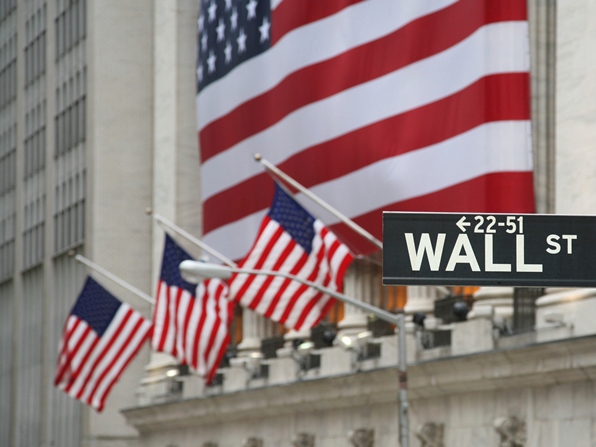
Wall Street New York where 2008 crisis started
Wells Fargo, which has assets of $1.889 trillion, is attracting negative attention in the United States because of a recent scandal. The bank’s employees have been accused of opening up to two million fraudulent accounts in order to collect bonus payments.
The risks from a failure at such a large institution are spread far wider than many people think. Legendary American investor Warren Buffett’s Berkshire Hathaway lost $1.4 billion on 13 September when news about the phantom accounts caused a big drop in Wells Fargo’s share prices. Buffett owns around 10% of Wells Fargo’s stock and he has applied to the Federal Reserve for permission to buy more.
Naturally the crises at Deutsche Bank and Wells Fargo will reignite the discussion about “too big to fail” financial institutions and calls for new regulation. Both major US political parties have language calling for the reinstatement of the Glass-Steagall Act in their official campaign platforms.
Glass Steagall barred US financial institutions from engaging in both investment and consumer banking. Some observers believe its repeal in 1999 led to the financial crisis of 2008. Others claim that its repeal reduced risk by giving banks more resources for survival.
Deutsche Bank should teach us all one lesson – large financial institutions still present a major risk. We all need to pay attention to them because a new crisis can start at any time.
Google is eyeing to enter the insurance market through partnerships with insurance companies.
The technology giant is looking to forge partnerships with insurance providers in France and some of its divisions including Nest, which manufactures smart thermostats, smoke detectors, and other security systems, said Google France Managing Director Nick Leeder.
Speaking during a panel discussion at the recent reinsurance industry’s annual meeting in Monte Carlo, Leeder said, “With some of the things we have done around Nest, we have been working with insurers in France like AXA and Allianz to develop bundles of products which blend technology and hardware with insurance.”
Leeder stressed that the company is not entering the insurance market directly.
“We’re clearer about the role that we can play and what we can add, and we are looking for partners.”
Insurance companies may be breathing a sigh of relief now that Google has confirmed that it is just seeking insurance partners.
According to a recent report from consultants Capgemini, over 40 percent of insurance companies deem Google as a potential threat owing to its strong brand and ability to manage customer data.
Google is now directing more of its efforts on healthcare.
Earlier this year, it shut down Google Compare, its price comparison website for motor insurance.
According to a report by Business Insider UK, teaming up with insurers to offer Nest products will help diversify the sales channels of Google.
Nest has struggled this year, which could have prompted Google to look for other means to sell its products, it said.
Google’s parent company Alphabet acquired Nest in January 2014.
In August, Nest teamed up with Southern California Edison to offer power bills discounts on Nest users, creating the incentive for existing customers to purchase a Nest product.
Through this alliance, the power company is able to provide less power to Nest-equipped houses, helping ease power shortages in this region.
Smart home products can help not only power companies but also insurance providers, Business Insider UK added.
Consumer IoT products help insurers make more informed risk determinations, create better payout models and ultimately expand clientele base.
Connected home products also help prevent disasters that need insurance payouts through their monitoring features, it added.
According to a study conducted by Accenture last year, an increasing number of insurers are integrating smart home products into their insurance package offerings.
The survey found that 17 percent of insurance companies have already introduced or are about to unveil smart home technology products and services. This figure represented an increase of 5 percent in 2015.
Car insurance specialist Admiral has recorded a sharp decline in shares after it warned that low interest rates and market volatility following the UK’s vote to leave the EU had undermined its capital reserves.
The Cardiff-based insurer, which owns the Bell, Diamond and Elephant brands, as well as price comparison site Confused.com, said lower interest rates had led to an increase in the liabilities’ value and slashed its capital.
This triggered a decline in solvency ratio—a gauge of financial strength—from 206 percent at the end of December 2015 to 180 percent at the end of June this year.
Geraint Jones, finance director of Admiral, commented: “What we saw immediately after the Brexit vote were quite sharp falls in gilt yields and risk-free interest rates. Lower interest rates mean bigger claims liability valuations and a lower solvency ratio.”
According to UBS analysts, the weakened solvency ratio had diminished the surplus capital available for the insurer to pay out to shareholders.
Admiral reduced its estimates for future payouts from £150-£200 million to £100-£150 million.
“The yield curves have moved pretty violently post-Brexit and we’re amending our estimates to say what we know at the moment, it’s more like £100m to £150m available for payout,” said co-founder and chief executive David Stevens in an interview with Bloomberg. “I don’t think it’s that big of a deal to the underlying economics of the company.”
Admiral warned of more potential risks from the Brexit including volatile interest and exchange rates, weaker British economy and limited access to the EU.
First-half results also showed a 4 percent increase in pre-tax profit to £193 million. Interim dividend also rose from 51p to 62.9p.
Revenue went up to £1.26 billion in the first half of 2016, as the FTSE 100 firm drew 340,000 more customers to its car insurance policies.
In spite of an increase in the cost of insurance cover, Admiral’s UK car insurance business saw a 16 percent increase in turnover to £222.8 million in the first six months of the year.
Insurers have increased motor cover to offset the increase in insurance premium tax and cover personal injury claims.
“In the core UK car insurance business, we’ve benefitted from an increasingly rational motor market with evidence of a move towards a less violent cycle. Prices have been rising, and we’ve used this opportunity to grow our motor book strongly,” Mr Stevens said.
Confused.com, which it founded in 2002, saw its profits surged to 8.3 million.
Across all its brands, Admiral saw a 15 percent increase in the number of customers to 4.82 million.
Bermuda-based global specialist insurance group Hiscox has completed the sale of the Hong Kong division of DirectAsia to Well Link Group Holdings Limited, after obtaining regulatory approval from the Office of the Commissioner of Insurance (OCI) in Hong Kong.
The deal will allow Hiscox Group to focus on growth strategy of DirectAsia’s businesses in Singapore and Thailand, where the business holds strong potential.
“The Hong Kong division of DirectAsia is a business with a great team and a distinctive business model, which has grown its premium income strongly since launch,” Bob Thaker, managing director of DirectAsia Group, said when the sale was first announced in March this year.
“However the focus for DirectAsia is on our core Singapore and Thailand markets where we see significant growth opportunities, and this transaction allows us to focus our energy and investment on those markets. Well Link is a great fit in terms of values and culture for the people and customers of the Hong Kong business unit, and this transaction gives them an attractive platform for growth in the region.”
Clyde & Co, the international law firm advised Hiscox on the sale. The advisory team was led by Kevin Martin with support from Partner Ian Stewart and the transaction team. Kevin Martin said of the deal: “We are delighted to have advised long-time client DirectAsia on the sale of its Hong Kong division” DirectAsia is a direct to consumer insurance company that mainly offers motor insurance. It also has ancillary lines in travel and healthcare. Backed by call centres, DirectAsia offers a different business model in a market pre-dominated by agent-based channels.
The company started in Singapore in 2010 and expanded in Hong Kong and Thailand in 2012 and 2013, respectively. It has more than 75,000 customers and about 200 employees across its three operations.
In 2015, DirectAsia’s Hong Kong division made $8 million of Gross Written Premiums (GWP). The company serves 29,000 customers and has 40 employees.
A member of Hong Kong-based financial conglomerate, Well Link is supported by an investor group whose interests span asset management, corporate and customer finance, insurance broking and securities and futures brokerage.
The acquisition of DirectAsia’s Hong Kong division will complement Well Link’s existing businesses and present broader product opportunities.
“We welcomed the opportunity working with the current DirectAsia team to make it another successful business of our group. It is an important step towards our group’s long-term ambition to build a successful finance business in this region,” said a Well Link representative.
Well Link has the right to use the DirectAsia brand in Hong Kong for up to 12 months.
The Hiscox Group employs more than 2,200 people in 14 countries. It offers a wide range of specialist insurance for businesses, professionals and homeowners through its retail businesses in Europe, the UK and the US.







 The deal will allow Hiscox Group to focus on growth strategy of DirectAsia’s businesses in Singapore and Thailand, where the business holds strong potential.
“The Hong Kong division of DirectAsia is a business with a great team and a distinctive business model, which has grown its premium income strongly since launch,” Bob Thaker, managing director of DirectAsia Group, said when the sale was first announced in March this year.
“However the focus for DirectAsia is on our core Singapore and Thailand markets where we see significant growth opportunities, and this transaction allows us to focus our energy and investment on those markets. Well Link is a great fit in terms of values and culture for the people and customers of the Hong Kong business unit, and this transaction gives them an attractive platform for growth in the region.”
Clyde & Co, the international law firm advised Hiscox on the sale. The advisory team was led by Kevin Martin with support from Partner Ian Stewart and the transaction team. Kevin Martin said of the deal: “We are delighted to have advised long-time client DirectAsia on the sale of its Hong Kong division”
DirectAsia is a direct to consumer insurance company that mainly offers motor insurance. It also has ancillary lines in travel and healthcare. Backed by call centres, DirectAsia offers a different business model in a market pre-dominated by agent-based channels.
The company started in Singapore in 2010 and expanded in Hong Kong and Thailand in 2012 and 2013, respectively. It has more than 75,000 customers and about 200 employees across its three operations.
In 2015, DirectAsia’s Hong Kong division made $8 million of Gross Written Premiums (GWP). The company serves 29,000 customers and has 40 employees.
A member of Hong Kong-based financial conglomerate, Well Link is supported by an investor group whose interests span asset management, corporate and customer finance, insurance broking and securities and futures brokerage.
The acquisition of DirectAsia’s Hong Kong division will complement Well Link’s existing businesses and present broader product opportunities.
“We welcomed the opportunity working with the current DirectAsia team to make it another successful business of our group. It is an important step towards our group’s long-term ambition to build a successful finance business in this region,” said a Well Link representative.
Well Link has the right to use the DirectAsia brand in Hong Kong for up to 12 months.
The Hiscox Group employs more than 2,200 people in 14 countries. It offers a wide range of specialist insurance for businesses, professionals and homeowners through its retail businesses in Europe, the UK and the US.
The deal will allow Hiscox Group to focus on growth strategy of DirectAsia’s businesses in Singapore and Thailand, where the business holds strong potential.
“The Hong Kong division of DirectAsia is a business with a great team and a distinctive business model, which has grown its premium income strongly since launch,” Bob Thaker, managing director of DirectAsia Group, said when the sale was first announced in March this year.
“However the focus for DirectAsia is on our core Singapore and Thailand markets where we see significant growth opportunities, and this transaction allows us to focus our energy and investment on those markets. Well Link is a great fit in terms of values and culture for the people and customers of the Hong Kong business unit, and this transaction gives them an attractive platform for growth in the region.”
Clyde & Co, the international law firm advised Hiscox on the sale. The advisory team was led by Kevin Martin with support from Partner Ian Stewart and the transaction team. Kevin Martin said of the deal: “We are delighted to have advised long-time client DirectAsia on the sale of its Hong Kong division”
DirectAsia is a direct to consumer insurance company that mainly offers motor insurance. It also has ancillary lines in travel and healthcare. Backed by call centres, DirectAsia offers a different business model in a market pre-dominated by agent-based channels.
The company started in Singapore in 2010 and expanded in Hong Kong and Thailand in 2012 and 2013, respectively. It has more than 75,000 customers and about 200 employees across its three operations.
In 2015, DirectAsia’s Hong Kong division made $8 million of Gross Written Premiums (GWP). The company serves 29,000 customers and has 40 employees.
A member of Hong Kong-based financial conglomerate, Well Link is supported by an investor group whose interests span asset management, corporate and customer finance, insurance broking and securities and futures brokerage.
The acquisition of DirectAsia’s Hong Kong division will complement Well Link’s existing businesses and present broader product opportunities.
“We welcomed the opportunity working with the current DirectAsia team to make it another successful business of our group. It is an important step towards our group’s long-term ambition to build a successful finance business in this region,” said a Well Link representative.
Well Link has the right to use the DirectAsia brand in Hong Kong for up to 12 months.
The Hiscox Group employs more than 2,200 people in 14 countries. It offers a wide range of specialist insurance for businesses, professionals and homeowners through its retail businesses in Europe, the UK and the US.