Uberisation; the paradigm shift to a data-driven gig economy is both, a threat and an opportunity for insurers.
The threat is that data-driven marketplaces, like Uber’s ridesharing, will make it cheaper and easier for companies to perform the risk management tasks traditionally handled by insurers, Lloyd’s of London CEO Inga Beale warned in 2015. The opportunity takes the form of new markets and new kinds of coverage.
Beale believes that data-driven products will disrupt the insurance market, The Financial Timesreported. Many of those products will be created as a result of gig-economy solutions like Uber.
Beale’s belief is that digital marketplaces will allow specialised underwriters and risk managers, such as those at Lloyd’s, to sell directly to consumers and small businesses. An example of how this would be accomplished would be an algorithm that analyses data, and creates specialised insurance policies for individuals working in the gig economy, such as Uber drivers.
Instead of being underwritten by a large carrier; that policy would be sold directly to investors through the marketplace. The algorithm would identify lower risk individuals and market their policies to the investors. Advantages to this model would be lower costs, and the ability to insure individuals in unique situations.
A danger for insurers is direct competition for both wholesale and retail business from unconventional competitors, including brokers and marketplaces like Lloyd’s. Many of these players will use the data-driven gig economy to identify customers and market to them.
Uber as a market for insurance
The two most visible gig economy brands, transportation provider-Uber and the rental solution Airbnb, offer a view of the opportunities and risks facing insurers.
Uber Technologies Inc. is expanding beyond ride-hailing to offer a variety of other services on a per-gig base. These include the courier service UberRUSH, UberEATS which delivers takeout meals and a delivery service for goods ordered from Walmart Stores in the United States. Each of these services is performed by a contractor with his or her own vehicle.
Uber has already used some of the data collected through its app to sell products to customers. Uber and a number of companies are leasing, renting and selling vehicles to drivers in the United States. The car payment is covered by taking a portion of the Uber driver’s earnings. Lending decisions are based upon the Uber drivers’ performance rather than credit ratings. Uber is also experimenting with a service that rents cars to drivers in London.
A logical extension of this would be an insurance premium that is paid by deducting a percentage from the drivers’ earnings. Insurers would base the premium on data about the driver collected by Uber.
One potential stream of revenue for Uber in the future, might be to identify its’ safest drivers; insure them, and sell the policies through a market like the one at Lloyd’s.
Uber as a risk management tool
Such risk-management might enable Uber to expand into the transportation of high-value items or dangerous goods. Examples of this might include delivery of jewellery, electronics or even cash. Uber would control costs by offering specialised insurance.
The potential liabilities from these activities are enormous. For example, would Uber be liable if a diner contracted food poisoning from a dish delivered by UberEATS? Who would be responsible if goods transported by UberRUSH were lost or stolen?
Liability issues are already dogging Uber in the United States where a judge allowed two women to sue the service because of sexual assault committed by its drivers. The women’s attorneys are arguing the responsibility for the assaults, Employment Screening Resources reported. Uber claims it has no liability because the drivers were technically independent contractors.
The basis of the lawsuit is essentially a risk-management issue. The women’s attorneys are arguing that Uber could have reduced the risk of rape by conducting criminal background checks on drivers. Uber is contending that the risks do not justify the costs of such checks.
Lawsuits over sexual assault; and a mass shooting committed by an Uber driver in Michigan, indicate that there are serious deficiencies in Uber’s risk management. That creates another kind of opportunity for insurers because the company is taking on serious financial risks that will require insurance coverage at some point.
Another dilemma facing Uber in the United States is that most auto insurance policies there, specifically exclude commercial activities from coverage. That means Uber drivers would be violating laws that require insurance in 49 of the 50 American states.
Allstate Corp is attempting to rectify that by offering policies specifically for ridesharing drivers. The additional coverage costs between $15 and $20 (£15) a year, Insurance Business America reported. Future products that might be offered to drivers include coverage for products they are transporting.
Airbnb and Insurance
Short-term rental giant Airbnb also provides a potential market for a variety of products. An American company called Payfully is already using Airbnb booking data as a basis for factoring decisions. Payfully advances money to Airbnb hosts based on past booking data. Payfully takes the right to claim the revenue from future bookings in exchange for the cash advance.
Payfully advances money to Airbnb hosts based on past booking data
An insurer would be able to use the same method to offer coverage to Airbnb hosts. One example of this would be a specialised liability policy that would cover the hosts’ guests and their belongings. The premium might be based on the number of guests or the risks involved.
Admiral is now offering host-insurance as an option for customers in the United Kingdom. That makes it the first insurer to enter the market which now consists of up to 50,000 homes on Airbnb alone.
Airbnb presents a special challenge for insurers because some of the risks involved are hard to quantify. An example of the questions that arise include: is a host liable if a guest is assaulted while walking to a rental in a “bad neighbourhood?” Who is liable if a fire at a rental destroys the guests’ possessions?
Who is responsible if guests trash an Airbnb rental? This seems to be the major risk Admiral is insuring against, largely because of numerous news stories about flats trashed by Airbnb renters. Admiral’s Host Insurance also protects the owner’s valuables; including jewellery, electronics, and artwork, for up to £5,000.
Admiral’s host coverage; like Allstate’s Uber and Lyft insurance, is designed as an add-on or rider to an existing policy. The idea here is to sell coverage to the gig-economy worker as both a business owner and a private individual.
Uberisation will transform the insurance industry by creating large new markets for coverage. Understanding it will be critical for insurers that want to tap new streams of revenue in the years to come.
Many large corporations are at risk from a practice that most people believe to be relegated to history books: slavery.
A modern-day abolitionist movement, organised and financed by an Australian mining billionaire, is turning up the heat on companies that buy products or materials created with slave labour. Andrew “Twiggy” Forrest, the founder of Fortescue Metals Group, founded the Walk Free Foundation which publicises the problem through the Global Slavery Index.
The Index, which was suggested by Bill Gates, measures the extent of slavery around the world in order to raise awareness of the issue. The Index indicates that some form of slavery exists in all 167 of the world’s nations, The New York Times reported. The Foundation also estimates that around 45.8 million people are kept in some form of slavery.
The country with the most slaves is India with around 18.35 million; other major offenders include China with 3.39 million slaves, Pakistan with 2.13 million, Bangladesh with 1.53 million and the former Soviet republic of Uzbekistan with 1.23 million.
To make matters worse around 8.4 million of the world’s slaves are children. The nation with the highest percentage of slaves is North Korea, where 4.37% of the population is kept in bondage.
Business risks from slavery
The risk to businesses is an obvious one, they might be held liable for selling or using products or materials made or extracted with slave labour. Disturbingly, the Walk Free Foundation’s research indicates that many items produced by slaves find their way into the modern supply chain.
Prawns sold in supermarkets in the United Kingdom and the United States, are processed by slave labourers imprisoned on Thai fishing boats. Cocoa beans, an ingredient in chocolate, are harvested by slaves in the Ivory Coast, one of the world’s leading producers. Cobalt, a key material used in electronics, is mined in the Democratic Republic of the Congo, which has a high level of slavery.
Around 60% of the world’s nations are at risk for having at a least some slaves in their supply chains. Some major exporters, including India and China, have large numbers of slaves in their supply chains. Even most European Union members had a medium risk of using slave labour, the Index noted.
Legal risks from slavery
All this indicates that it is possible for a company to be selling or buying materials or products made with slave labour, and not even realise it. This creates legal risks because the United Kingdom’s parliament passed an anti-slavery law, Modern Slavery Act, that requires companies with revenues of £36 ($47 million) or more to document efforts to eradicate slavery.
Another risk companies, particularly in the United States, face is litigation filed on behalf of slaves. American courts allow attorneys to file class-action lawsuits on behalf of a group or class of people. To file such a suit, all a lawyer needs is permission of one member of the class.
That means all a human rights lawyer would need to file such a suit is to find one ex-slave. Such suits can create financial and legal risks as well as generate bad publicity and the possibility of actions such as boycotts.
Other risks include the possibility of criminal prosecution. Slavery is illegal in most nations; it is even banned by the 13th Amendment to the US Constitution. Most American states have specific laws that make human trafficking and forced labour as felonies.
The problem of defining slavery
The risk from slavery is greatly magnified because the practice is actually very hard to define. The number of people bought and sold as slaves is actually very small.
Most of the world’s slaves are kept in some form of what the 13th Amendment describes as “involuntary servitude.” Slavery as defined by human-rights groups like Walk Free is a catchall term that includes forced labour, prison labour, debt peonage, bondage, prostitution, forced marriage, conscription, sharecropping and a wide variety of other practices.
The legal definition of slavery can also be very ambiguous. In the United States, the 13th Amendment allows involuntary servitude as punishment for crimes. This means prisoners can be forced to work in America, as long as they have been convicted of a crime. Some European nations that ban slavery still require conscription, or mandatory military service, for most young men.
American prisons generate an estimated $2 billion (£1.5 billion) a year through compulsory labour, Newsweekreported. That means some US made products might be technically in violation of anti-slavery laws in other nations.
Slavery and risk management
The publicity Forrest and the Walk Free Foundation have created, may force corporations to include slavery among the risks they manage for.
Companies might be forced to retain investigators to check supply chains for evidence of forced labour. Expensive changes in sources of raw materials might be required.
It might also be possible to create insurance products, perhaps some form of bonding to protect companies from slave associated risks.
Understanding the problem of slavery and the risks it poses will be vital for many companies in many industries in the near future. Publicity about the issue is growing, and so will political pressure for business to end it.
The Court of Appeal has released its verdict on the ‘B Atlantic’ case, ruling that vessels involved in drug smuggling are not covered by standard war risk policies.
The decision reverses the High Court’s judgement last year, wherein Justice Flaux ordered a $14 million (£11 million) insurance payout.
On 13 August 2007, three bags of cocaine weighting 132kg were found strapped to the B Atlantic vessel’s hull, which was set to transport cargo of coal in Lake Maracaibo, Venezuela to Italy.
The vessel’s Master and Second Officer were indicted of involvement in drug smuggling and convicted and sentenced to nine-year imprisonment.
The vessel, which was abandoned to the court in September 2009, remained in detention until August 2010 before it was finally confiscated.
The owner of the vessel filed for a claim for its loss to their war risk insurers, but the latter declined coverage alluding to standard war risk exclusion for detentions due to breach of customs regulations. As seen in previous cases, customs regulations exclusion holds true for drug smuggling cases.
The owner initially argued that the exclusion was not applicable as (a) the detention and confiscation of the vessel had to do with political interference in the judicial process in Venezuela, and (b) on an accurate construction of the policy, the loss was due to malicious acts of third parties, which was an insured risk.
Justice Flaux denied the allegations of political interference but decided that the loss was covered by the standard war risk policy. He ruled that “upon the correct construction of the policy and reading the malicious acts cover and the exclusions together, “infringement of customs regulations” in the exclusion does not include an “infringement” which is itself no more than the manifestation of the relevant act of third parties acting maliciously and the exclusion is subject to that limitation”.
The insurers appealed against his findings on construction to the Court of Appeal, which ultimately reversed Flaux’s decision.
Clark LJ held that the loss of the vessel was due to a combination of (a) the malicious act—the initial concealment of drugs; and (b) the subsequent detention—which was due to the malicious act and constituted the customs infringement. The principles established by ‘Cory v Burr’ and ‘Wayne Tank’ applies: the insurers are not liable in the event of two proximate causes, one covered and the other within the exclusion.
Both Sir Timothy Lloyd and Lord Justice Laws agreed to Clark LJ’s decision.
Meanwhile, those who would like cover for detentions caused by smuggling are being advised to discuss with their insurance brokers and buy additional insurance.
The most common online and smartphone security protection method has become one of the greatest risks to data and information technology systems.
The standard two-factor authentication method; that you probably use to access most of your online accounts, is now so easy to crack that the United States government considers it a security threat. The National Institute of Standards and Technology (NIST); the US agency that develops technology standards, wants to ban the use of two-factor authentication, Fortunereported.
Two-factor authentication is the standard online access protocol that asks users for a password and a username. NIST wants to end its users because it is easy for hackers to steal or replicate passwords. A major reason why NIST wants to get rid of the protocol is that it creates a false sense of security.
The risk from text messaging
Another motivation for NIST’s action is the growing threat to security posed by SMS (Short Message Service) texts; like those sent over Twitter and WhatsApp. The danger is that hackers will trick an organisation into sending them a temporary access code; that give them access to data such as bank or credit card accounts.
To make matters worse hackers can now seize control of SMS accounts. American political activist DeRay McKesson found that somebody had taken over his Twitter account; and used it to send out messages supporting Donald Trump, whom he opposes.
The hackers achieved that by calling McKesson’s phone company; Verizon, impersonating him and having his messages redirected to another SIM card. It would be a simple matter for hackers to use the same tactic to steal financial data, or sensitive business information.
Nor is it just Twitter that is at risk; Telegram Messenger accounts belonging to political activists in Russia and Iran were hacked. Telegram is an encrypted SMS-solution that is considered to be far more secure than Twitter. The hackers may have been able to get access to the accounts by using information provided by state-owned telecom companies.
A major risk for insurers here is the growing use of solutions like Telegram and Twitter to send money. Apps like StartChat enable users to send payments in the form of Bitcoin. Another is the growing use of app-based payment solutions such as Apple Pay to access bank accounts.
The risk for banks, financial services, technology, and credit card companies is that criminals will use similar methods to redirect access codes, and other text messages to fake SIM cards. A crook that cloned your SIM card would be able to get your bank to send him an access code – that would provide access to your accounts for example.
Another threat is the use of devices called stingrays to intercept text messages. Hackers can use stingrays to capture text messages and change a user’s phone number, or subscriber information.
Risk management for SMS messaging
The risks SMS messaging and two-factor authentication pose for the insurance industry are great and obvious.
The insurers most exposed to this threat are those that issue identity theft and data protection policies. The use of false SIM cards is obviously identity-theft which increases potential losses to companies that issue such policies.
An obvious consequence of this risk will be the need to rewrite some insurance policies. Data-protection and identity-theft policies might need to contain provisions banning the use of some SMS solutions and two-factor authentication.
Another would be to require the use of apps like Google Authenticator which creates a one-time token or code that changes every few seconds. Such security is hard to crack, because hackers have no way of knowing what the new code is.
Other potential solutions include tokens, QR (quick read) code technology and blockchain (the technology used in Bitcoin). All of these encryption solutions employ a stratagem like Google Authenticator, which creates a new code or token for each message or transaction.
Requiring the use of blockchain-based payment solutions such as bitcoin; or Ethereum, for SMS money transfer might be another effective risk-management measure. These products use encryption technology that is theoretically invulnerable to cracking.
A final measure might be to bar the use of unencrypted SMS messengers like Twitter. Twitter only relies on two-factor authentication so it is fairly easy to hack.
New opportunities for insurers
There are some obvious opportunities for insurers here including data-theft coverage for SMS messaging, telecom and technology companies. SMS and phone providers might have to start providing such coverage for each account they issue.
New kinds of data protection and identity theft policies for individuals and organisations might also be needed. Financial services companies and banks in particular might need to add new layers of insurance coverage because of the growing threat. Some companies may also need insurance for corporate SMS messenger accounts.
The insurance industry will need to study the issues of two-authentication and SMS carefully, because the security threats are far greater than is commonly believed. New technologies and risk-management techniques will have to be developed if insurers want to avoid major losses.
A political scandal in the United States is shining a spotlight on an obscure and morally-questionable sector of the insurance market: kidnap and ransom coverage.
Republican presidential nominee Donald Trump and other critics are accusing the Obama administration of something that is everyday business at some insurance companies: paying a ransom. Critics are focussing on the release of $400 million (£300.30 million) in cash to Iran’s government by the US State Department shortly after American prisoners were released in that nation.
The administration claims that the cash was released to settle an old dispute between the two governments. Trump and others labelled it a ransom – a practice that is a violation of official US policy.
Even though ransoms are politically controversial they are business as usual for some of the world’s largest corporations. Havocscope estimated that around $1.5 billion (£1.14 billion) in ransom money is paid out each year, making kidnapping a very lucrative crime in some places. Kidnappers in Mexico raked in an estimated $50 million in ransoms in 2012.
Kidnapping is growing in popularity because the average ransom demand in 2012 was $2 million (£1.52 million). That makes the crime a very attractive proposition for some of the world’s worst people – including terrorists.
The US Treasury estimated that Al Qaeda collected around $125 million (£94.83 million) in ransoms between 2008 and 2013. Much of that money came from the taxpayers of various nations; France alone paid the terrorists $58.1 million to free some of its citizens from custody during that period.
Kidnap & ransom insurance is big business
An even greater source of ransoms is some of the world’s largest insurers; including AIG which offers Kidnap, Ransom & Extortion insurance. AIG even has a web page selling such policies to high-net worth individuals and corporations. Some of the policies available include theft, disappearance and hostage coverage and health insurance to cover medical expenses.
AIG currently offers up to $50 million worth of Kidnap, Ransom & Extortion insurance to its policyholder. Those covered get access to the services of NYA International, a global risk and crisis consultancy. NYA’s employees include “crisis response consultants” experts recruited from the military, law enforcement and intelligence agencies whose job is to respond to emergencies like kidnapping.
It is easy to see why companies like AIG are offering kidnap & ransom insurance. Battle Face estimated that the market for such coverage doubled between 2006 and 2011, rising from $250 million to $500 million (£379.32 million) in just five years.
Is the insurance industry financing terrorism
Even though it is profitable, kidnap and ransom insurance creates serious ethical and legal risks for insurers. On 25 May 2015, British Parliament passed a bill that makes it illegal for British insurance companies and residents of the UK to pay ransoms to terrorists.
White man captured by terrorist group
The House of Commons action was prompted by a United Nations report that estimated that ISIS collected between $35 and $45 million in ransoms in 2014. The fear is that terrorists will use this money to fund operations such as attacks on civilian populations.
Interestingly enough this law seems to make a distinction between ransoms paid to criminals, and those paid to terrorists. That means it might still be legal for a British insurer to pay a ransom to a Mexican kidnap gang, but not to pay one to the IRA or ISIS.
A potential risk to insurers is that terrorists will pretend to be criminals in order to collect ransom money. To get around laws against paying terrorists, all ISIS fighters would have to do is not mention is their true identity in a ransom demand.
What is a “Terrorist?”
Another problem for insurers is the definition of “terrorist”, does the term only apply to organizations or individuals with political or religious agendas such as ISIS, or to criminal gangs that employ similar tactics. Mexican drug cartels; which have no agenda beyond making money, use many of the same terror tactics as ISIS.
An even murkier grey area; as President Obama discovered, is the payment of ransom to governments. Since the Iranian government is legally recognized it is not a terrorist organization. Yet that regime like many governments; including those in the USA and the UK, has sponsored terrorism for strategic reasons in the past.
To complicate matters some terrorist organizations, including ISIS claim to be governments. An insurer might try to get around laws against paying ransoms to terrorists by having a representative of a government such as an intelligence agent or a police officer make the payment.
Liability & PR risks from kidnap & ransom insurance
If such a payment were made public, serious legal problems would arise. Including the obvious question of criminal liability, who would face prosecution the company itself, its executives or the government agency involved and its employees?
Another legal risk that issuers of kidnap and ransom insurance have to consider is liability for damage done by terrorists. If terrorists used the ransom to purchase weapons, ammunition or explosives, would the insurer be liable for the death and destruction they caused?
A risk facing American insurers like AIG is the US court system. Under American law, attorneys have the right to file class action lawsuits on behalf of classes or groups of victims. That means a lawyer could sue AIG on behalf of all the victims of an organization like ISIS, if accusations of ransom payments were made.
A perhaps greater risk from ransom payments is that of bad publicity. The insurance industry might face the kind of intense criticism the Obama administration has received for the cash payment sent to Iran for paying ransoms. If the media or politicians learned of a large ransom payment to terrorists an insurance company might find itself facing a public relations nightmare.
The dilemmas created by kidnap and ransom insurance are an example of the complex risks that modern terrorism and crime pose to insurers. Even some of the insurance policies designed to cover the risks of terrorism, create serious risks for the insurers.
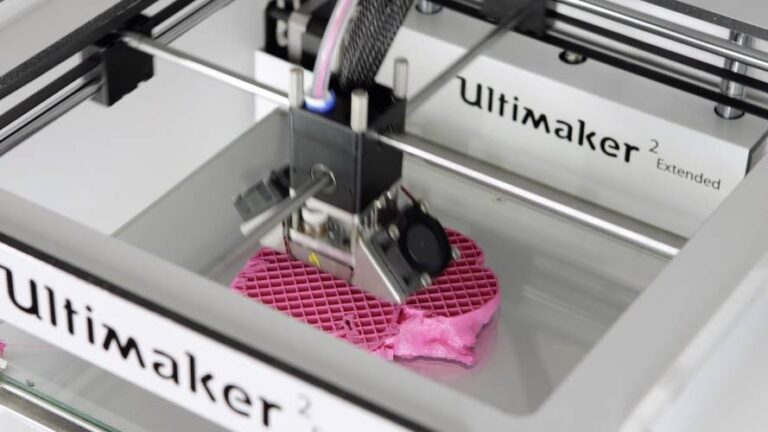
3D printing, a technology that promises to revolutionise the way things are made, is gaining popularity and acceptance in various industries and it’s set to bring great changes to the insurance industry too.
Known as additive manufacturing (AM), because it uses a range of laser-based or advanced printing techniques to build up models layer by layer. 3D printing allows individuals to produce physical objects from plastics and metals with equipment that is becoming increasingly accessible.
Worldwide shipments of 3D printers are projected to increase from about 490,000 in 2016 to more than 5.6 million in 2019, according to Gartner Inc.
Goldman Sachs has identified 3D printing as one of eight “extraordinary technologies forcing businesses to adapt or die,” with the potential to reach $10.8 billion in revenues by 2021.
As the technology advances and personal 3D printers become more affordable, their growing use in small businesses and homes poses unprecedented questions for the insurance industry.
When the end user of a product is also the manufacturer, who can be held strictly liable when a defective 3D-printed product causes a person’s injury, illness or economic loss? The designer? The company that made the printer? The person who used the printer?
While there is not yet adequate case law by which to fully gauge the risks of this new technology, there are issues that professionals in the insurance field should already be thinking about.
Intellectual Property (IP)
3D printing is especially susceptible to intellectual property theft because the underlying product design software can be used to make counterfeit products easily and at relatively low cost. Researchers at the University of California have discovered that hackers could steal the source code of a 3D printed product by detecting the sound waves created by each movement of the printer.
The software to detect and record the sound waves could be installed on a smart phone, and most manufacturing facilities do not monitor production workers’ smart phones.
In a press release, researcher Al Faruque said. “If process and product information is stolen during the prototyping phases, companies stand to incur large financial losses.”
Business Interruption
3D printers can require more power to operate than traditional manufacturing equipment; backup generators might not be robust enough in the event of a power outage and as a result the business production could be disrupted.
Also, businesses that use 3D printers should prepare for their potential breakdown and in such an event, it could take an extended period of time to repair or replace the 3D printer. And for that reason, it will be vital to understand the various types of 3D printers and their working technology.
On the other hand, the application of 3D printing might actually reduce the indemnity period as necessary parts may be just printed on site.
Product Liability
The current Product Liability (PL) laws may not be suitable to deal with 3D printing, and PL could potentially be one of the biggest risks associated with the emergence of the technology.
Because 3D printing involves multiple participants, including the producer of the materials used, the software designer, the printer manufacturer and operator, and the retailer. Problems that can arise could come from using wrong materials, as well as issues with tracing the liability of faults in 3D-printed products.
In the healthcare sector, Aprecia Pharmaceuticals was the first to win US Food and Drug Administration (FDA) approval to manufacture its Spritam pill using 3D printing technology. The pill, an epilepsy drug, which dissolves quickly in the patient’s mouth, brings a significant benefit to those who have trouble swallowing pills.
For pharma companies, lawsuits have always been a cost of doing business. However, Aprecia by manufacturing its pill with the new technology might expose itself to unfamiliar territories full of potential new risks. If the company gets it wrong with its 3D printed drug and it causes adverse effects in patients, it could seriously be liable for damages in a court of law.
Security
In a similar way to the pharma industry, the Federal Aviation Administration (FAA) recently certified 3D printed parts for General Electric (GE) commercial jet engines. GE uses the technology to introduce a number of benefits to its parts manufacturing such as being lighter in weights, simpler design and better performance from the engines.
Another company following the trend is the mighty Ford Motor Company who uses 3D printing to build products and prototypes. But the new technology poses real security threats similar to those in other industries. Because of its digital nature, 3D printing technology is susceptible to theft or sabotage by hackers.
A team of cybersecurity and materials engineers at the New York University (NYU) Tandon School of Engineering has conducted a research into the implication of cybersecurity of 3D printing technology.
Ramesh Karri, a professor of Electrical and Computer Engineering at NYU, who participated in the research, has pointed out that an attacker could hack into a printer that is connected to Internet to introduce internal defects as the component is being printed.
He also added that “new cybersecurity methods and tools are required to protect critical parts from such compromise”. This could result in a “devastating impact” for users and could lead to product recalls and lawsuits.
Finally, the question on everyone’s lips is how is the insurance market responding to 3D Printing?
Until courts address the many liability questions posed by this emerging technology, all of those involved in the process would be best served to seek frequent guidance from legal counsel and their insurance brokers.
Richard Weireter, Senior Treaty Underwriter at Swiss Re, recently commented that like any new technology reshaping our daily lives, the insurance industry adapted to the new ways and created new products to satisfy the market. He said “I expect to see many of those situations to arise with 3D Printing.”
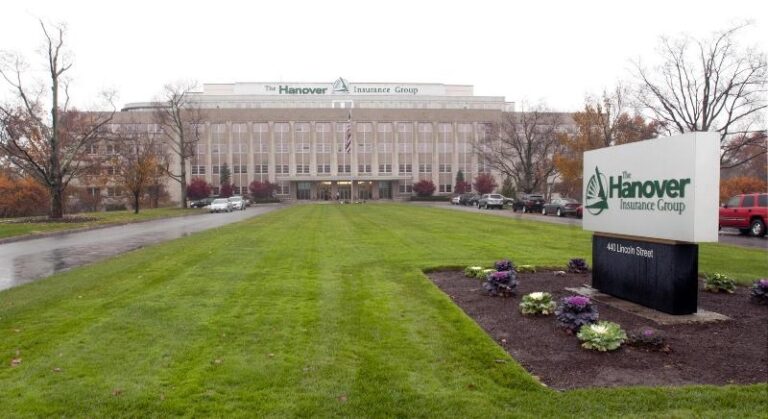
Massachusetts-based Hanover Insurance Group has seen a sharp decline in net income in the second quarter of 2016 owing to catastrophe and large losses, as well as movement in foreign exchange rates faced by its Chaucer division.
Figures from its Q2 2016 report showed that net income slid to $2 million from $120.7 million in the second quarter of 2015.
Despite this, the second quarter remained relatively stable for the insurance company.
Net premiums written hit $1.22 billion in Q2 2016, compared to $1.29 billion in Q2 2015 — a decline attributed to the sale of the Chaucer motor business in the UK.
Meanwhile, US net premiums went up 2.9 percent.
Net investment income stood at $69.1 million for the second quarter of 2016, compared to $70.7 million in the same period last year.
Two of its segments, Commercial Lines and Personal Lines, both saw continuous price increases, the company said.
Hanover’s combined ratio slightly went up from 95.7 percent in Q2 2015 to 97.3 percent in Q2 2016, including 4.5 points of catastrophe losses.
The company also repurchased 230,000 shares of common stock for $19.1 million, at an average price of $83.19 apiece during the quarter.
Joseph M. Zubretsky, president and CEO at The Hanover, commented, “The underlying fundamentals of the business remain very strong despite some specific, but isolated operating challenges in the U.S. and global large loss volatility at Chaucer. More broadly, the Hanover has an innovative underwriting platform, strong distribution plant and top-notch talent domestically and globally, which we will leverage for margin expansion, growth, and superior value creation.”
Eugene Bullis, Chief Financial Officer at The Hanover, said, “We achieved operating income of $54 million and operating return on equity of 8%, which was within expectations in light of our active participation in global syndicated risks, and unusual swings in foreign exchange rates this quarter. We remain confident in the strength of our balance sheet and positioning of the investment portfolio. Book value per share grew 2% during the quarter to $70.58, and was down slightly excluding net unrealized gains on investments, as we continued to prudently return capital to shareholders and improve our capital structure.”
The Hanover Insurance Group is the holding company for various property and casualty insurance companies, forming one of the biggest insurance businesses in the US.
Operating in four segments—Commercial Lines, Personal Lines, Chaucer and Other, it provides property and casualty products and services and distributes these to a select group of independent agents and brokers. Together with its agents, Hanover provides specialized coverage for small and mid-sized businesses, and insurance protection for homes, automobiles, and other personal items.
The company also underwrites business at Lloyd’s of London in major insurance and reinsurance classes (marine, casualty, property and energy) through its international member company Chaucer, which it acquired in 2011 in an attempt to expand its market presence and achieve greater scale and diversification.
The Other segment comprises Opus Investment Management, Inc, offering investment advisory services.
The insurance industry is not ready to deal with the massive risks that the Internet of Things; or IoT is creating. Even though much of the IoT is already around us; few insurers are researching it, or tailoring coverage for the risks it creates.
The concept behind the Internet of Things is a simple one; just connect every electronic device to the web via WiFi or broadband. Yet it is an inherently disruptive development that will create vast risks, many of which are poorly understood.
Some examples of the IoT include:
The use of wireless technology to track freight, warehouse and retail inventories, cargo containers, railcars and trucks.
The installation of wireless devices in vehicles to track them or monitor driving patterns or mileage.
Appliances, air conditioners, furnaces and other devices in the home that can be controlled or monitored over the internet.
Automatic ordering of supplies or materials by devices. Amazon is experimenting with wireless devices that allow customers to automatically order new supplies of products like laundry detergent at the touch of a button.
Security cameras and sensors that allow for the long distance monitoring of properties, or vehicles.
The IoT is growing faster than you might think, it is expected to connect 200 billion devices by 2020, Insurance Business Americareported. Despite that the insurance industry is largely ignoring the risks the IoT is creating.
Most insurers are simply ignoring IoT or resisting it, Brian Murdock; AIG’s managing director for the American states of Georgia, Tennessee and Alabama, said in a July speech. Murdock expects the IoT to completely disrupt the insurance industry – although he gave few specifics.
IoT greatly increases the danger from hacking
The greatest and most obvious risk created by the IoT is from hacking. Security researchers have demonstrated that IoT-connected devices can be easily hacked.
Back in 2013, researchers; from a company named Trustwave, made headlines by hacking into a “smart toilet,” Forbes reported. The same hackers were also able to turn the lights in a house; equipped with a home automation system, on and off via remote control.
It would be possible to disrupt a city’s power grid by hacking air conditioners if they were plugged into the IoT. In February 2016, security experts Vasilios Hioureas of Kaspersky Lab and Thomas Kinsey of Exigent Systems demonstrated that it would be possible to turn air conditioners on and off or raise or lower temperatures in a building via online commands. Such an attack can disrupt the grid by raising electricity usage to levels power plants cannot deal with, Wired reported.
An even greater risk was exposed in July 2015 when two American security researchers shut down a moving vehicle via hacking. Charlie Miller and Chris Valasek were able to take over a Jeep Cherokee; an SUV manufactured by Fiat-Chrysler, by Wi-Fi hacking or “wardriving,” Wired reported.
Once in control the two turned the windshield wipers on and off, changed stations on the radio and turned on the air conditioning, Wired writer Andy Greenberg reported. Most disturbingly, the two were able to shut the vehicle’s engine off; as it was cruising down the road at 70 miles per hour.
The risks are greater than you think
Sabotage is just the beginning of the risks that hacking of the IoT presents to insurers. Other potential dangers include data theft, illegal surveillance, industrial espionage and enabling of other kinds of crimes.
Thieves could hack home or building automation systems; and command them to open doors or turn off security systems for example. Robbers might be able to track shipments equipped with Wi-Fi devices, and plot the best place to intercept them.
Another potential danger is that hackers will use IoT devices to get access to other systems. For example, a crook might hack a bank’s air conditioner in an attempt to gain access to a database containing account numbers.
Liability and the Internet of Things
All of this exposes the greatest dilemma that the IoT poses for insurers: liability. If a self-driving car connected to the IoT gets hacked and crashed who is liable?
Would it be the auto manufacturer, the manufacturer of the WiFi system, the Wi-Fi provider, or the maker of the software that controls the vehicle? All of those companies will need specialized insurance products to protect them from that liability.
Such questions abound in the Internet of Things. An interesting hypothesis is would the manufacturer of a furnace be liable; if it were hacked and used to damage a home? For example if the furnace were turned off on a day when temperatures outside dropped below freezing, causing pipes to freeze and burst. Would homeowner’s insurance cover that situation; or would the manufacturer or programmers of a home automation system?
A problem for commercial insurers is would the manufacturer of a tracking device be liable if a shipment disappeared? Is the creator of such a tracking device taking responsibility for loss prevention?
The IoT obviously poses interesting dilemmas and great risks for insurance but it also creates some intriguing opportunities. These include new kinds of coverage for IoT connected devices; and vast amounts of data that can be used for actuarial purposes, or risk management.
Insurers had better start paying close attention to the IoT, because it is already creating great risks and tremendous opportunities. Understanding the Internet of Things and the risks it creates, has become a necessary part of underwriting and risk management.
American International Group has announced on August 15 that it would sell its mortgage-guaranty unit to Arch Capital Group Ltd, a Bermuda-based writer of specialty lines of property and casualty insurance and reinsurance, for around $3.4 billion.
AIG Chief Executive Officer Peter Hancock has agreed to the deal in his latest attempt in restructuring his company and free up capital to return to investors.
The deal is estimated at $3.4 billion including $2.2 billion in cash and the rest in Arch securities, New York-based AIG said in a statement. AIG will retain a portion of mortgage-insurance business initiated from 2014 through 2016 through a previously released intra-company risk transfer deal.
AIG, the largest commercial insurer in the United States and Canada, said it would get $2.2 billion in cash, $250 million in Arch Capital’s perpetual preferred stock and $975 million in non-voting common-equivalent preferred stock from the sale of United Guaranty Corp.
The biggest commercial insurer has stated it would acquire $2.2 billion in cash with the rest in Arch securities. The corporation has stated that it would offshoot the mortgage insurance unit, lay off employees as well as selling its broker-dealer network included in its extensive overhaul which assured shareholders in fending off activist investor Carl Icahn who has been urging for the company to divide itself into three smaller companies. AIG reported a higher-than-expected quarterly profit, which was led by firm underwriting and low costs.
“Today we have reached an important milestone in a strategy we committed to in March 2015, when I stated in my first shareholder letter as AIG CEO that we would ‘sculpt the future AIG’ into a more focused company and that selective divestitures would be an important part of reaching that goal,” said Peter Hancock.
“We restated that objective earlier this year when we made the IPO and eventual sale of UGC a key part of an updated overall strategic framework for AIG.”
“We believe this transaction maximizes UGC’s value while further streamlining our organization. It puts us in a stronger position to invest in the talent and technology essential to being our clients’ most valued insurer, while we continue to deliver on the promise made by AIG’s Board and management to return $25 billion to our shareholders by the end of 2017. The deal also maintains our affiliation with the mortgage insurance market and its leading company, through retention of recent business written by UGC and our stake in Arch.”
Shares of Arch Capital and AIG were unaffected in after-market trading on Monday.
J.P Morgan and Morgan Stanley were bankers for AIG, which got legal advice from Sullivan & Cromwell LLP. Arch used Credit Suisse Group AG and the law firms Cahill Gordon & Reindel LLP and Clyde & Co.
The risks from phone-based payment solutions like Apple Pay might be far greater than many insurers assume. Despite media reports about the safety of Apple Pay; which arrived in the UK in June 2016, there are some indications that such apps might be far riskier than is commonly believed.
Most of America’s large retailers are refusing to accept Apple Pay; and a similar product from Alphabet called Android Pay. The reasons for the refusal are obscure but most of the stores involved are equipped to accept such payment.
Nor are large retailers necessarily hostile to the idea of app-based payment, the largest retailer in the United States and the world; Walmart Stores Inc., has rolled out its own payment app. Walmart Pay is now accepted at 4,600 of the company’s stores in America, Market Mad Housereported. Despite that Walmart refuses to accept Apple Pay or Android Pay in its stores.
Are there security risks to Apple Pay
Insurers need to monitor this situation because security concerns may have played a role in Walmart’s decision. Walmart Pay employs a totally different technology than Apple Pay and Android Pay.
Apple Pay and Android Pay use Near Field Communication (NFC); in which a wireless signal is used to communicate directly with a retailer’s payment system. Walmart Pay uses Quick Read (QR) Code technology; in which the phone’s camera takes a picture of a bar code, shown on a cash register screen.
Walmart Pay App using Quick Read (QR) Code technology
A key difference between Walmart Pay and Apple Pay; is that Walmart Pay then uses the phone to withdraw money directly from a bank or credit card account. The transaction takes place outside Walmart’s system, which might limit liability. Both systems try to protect the transaction by creating a token; or separate encryption, for each payment.
An interesting difference is that Walmart’s solution offers an added layer of security; in the form of the QR code. A new code is generated for each transaction, which theoretically makes it harder to crack.
Nor is Walmart the only entity that is forgoing NFC in favour of QR Code technology. America’s largest bank; JP Morgan Chase, is offering Chase Pay – another QR-Code based solution. Like Walmart, Chase has refused to utilize NFC, which raises serious questions about Apple Pay’s security.
Liability and Payment Solutions
Interestingly risk management and liability seem to be the reasons why there are two different payment app technologies in widespread use. Apple, Alphabet, Chase and Walmart all seem to be motivated by fears of liability in the decisions made about payment applications.
Apple is refusing to share transaction information with retailers; possibly out of the fear that it would be liable if customers suffered losses, if payment data were lost or stolen. That is part of the reason why retailers like Walmart, Amazon and the giant American grocer Kroger have refused to accept Apple Pay; those companies employ a data-driven business model, in which corporate decisions are based on transaction information.
Retailers like Walmart might be afraid they would assume liability for losses if they give a technology company like Apple access to their payment systems. Part of the reason for resistance to NFC is that it connects an outside app directly to a payment system.
Another US retailer; Target, was forced to pay customers $10 million because of hacking in 2015, CNN reported. Target was sued after hackers stole the credit and debit card numbers of 40 million of its customers in December 2013. Target was also forced offer each customer a year of free credit monitoring and identity theft protection because of the breech. Given that history it is easy to see why American retailers are so resistant to new payment technologies.
Payment Applications and Liability
One reason why Walmart is offering its own payment solution is to limit liability by controlling its security. Interestingly, Walmart might be assuming a greater level of liability by taking full control of the payment ecosystem.
In the United States, banks and credit-card companies routinely assume responsibility for 100% of losses caused to customers by theft. Despite that American banks have been far more willing to embrace Apple Pay than retailers.
At last count, 1,433 American financial institutions were supporting Apple Pay. One reason for banks’ willingness to accept Apple Pay is that the United States government insures bank accounts for up to $250,000 (£191,168), through the Federal Deposit Insurance Corporation or FDIC. That means the FDIC is assuming some of the risks, banks are incurring by utilizing Apple Pay.
This raises an interesting question: who would be liable for losses if a payment app were hacked. Would it be banks, the government, retailers or the company offering the payment solution? Such questions will probably have to be resolved by the courts through litigation.
Banks resist Apple Pay in Australia
Nor are such disputes limited to the United States, in Australia four major banks; Westpac, Commonwealth Bank, the National Australian Bank and the Bendigo and Adelaide Bank, asked the nation’s financial services regulator for permission to negotiate collectively with Apple on issues including NFC. The regulator; the Australian Competition and Consumer Commission, has tabled the request so it can study the issue, the Australian Broadcasting Corporation (ABC) reported.
Liability is at the heart of this dispute because the banks want access to Apple’s technology. Apple has refused to give the banks direct access to its closed Apple Pay system because of potential risks to its security.
“Providing simple access to the NFC antenna by banking applications would fundamentally diminish the high level of security Apple aims to have on our devices,” Apple’s submission to the Commission reads.
Insurance and Payment Applications
The risks created by payment applications create some interesting opportunities for insurers.
The most obvious of these opportunities is policies that would protect retailers, financial institutions, individuals, government agencies like the FDIC or technology companies from losses created by payment applications. The risks from hacking and the potential liability might make such coverage vital to payment applications in the future.
This gives rise to some interesting disputes including how the insurance would be paid for. The most likely means of covering the cost would be added charges on transactions; although it remains to be seen if customers would accept the extra cost.
Other questions that will need to be answered include the level of risk and the amount of coverage necessary. So far; no payment app has been hacked, but given the amount of cash involved it is only a matter of time before some criminal penetrates Apple Pay or Walmart Pay. When that occurs, risk management and insurance questions will come to the forefront.
The risks and liability created by payment applications are far greater than is widely assumed. That means the opportunities for insurers created by this technology will be great.