Drones: an emerging market for insurers
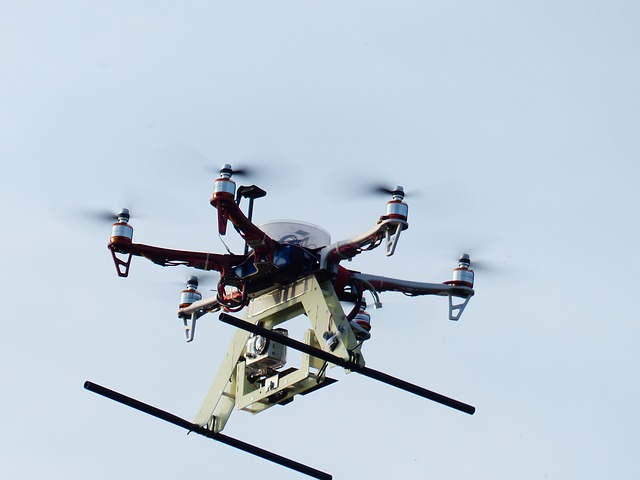
The drones or unmanned aerial vehicles (UAVs) sector has seen a phenomenal growth over the recent years thanks to the rapid development of the technology.
Once reserved to the military industry complex, drones are now hitting the public shelves because of the economy of scale, amongst other things, which makes owning a drone more affordable.
Hobbyists were the first group to fully embrace the new technology. For them, drones seemed like harmless toys to capture cool video footage from high above. The French went even further and are organising Stars Wars-style drone racing in the forests as the video below shows
Not only the general public is interested in these devices but, also, businesses see a great way of improving efficiency, at the same time reducing costs, using drones. For example last year, Amazon, the world’s largest online retailer, unveiled plans to use drones to deliver small packages. Other companies like Domino’s pizza, DHL are also testing the new technology.
The latest of them is the Finnish postal service which launched their first commercial drone ‘parcelcopter’ delivery service. The service is used for delivering goods bought online between Helsinki and an island destination three miles away.
In addition to the above, drones are used in many other applications such as rescue missions, research, video production and photography, security and surveillance. In all of these applications, a number of new and little understood risks and issues are brought about that all the parties, involved in the new technology, are currently trying to understand and adapt to.
Marsh, a leading Aviation and Aerospace insurance broker, recently published a report in which it has identified a number of issues impeding the technology advancements. The report also outlines how the insurance industry is helping to increase the adoption of drones’ usage.
Fundamentally, the main issues revolve around three elements namely Regulation, Safety and Security.
Brexit’s Impact on London Financial Centre

With David Cameron’s victory in the last general election, the probability of Britain exiting from the European Union has increased tremendously. This phenomenon has given rise to a lot of speculations, several discussions, and countless points of view on how this withdrawal from the EU will affect Great Britain, and in particular, its capital, the City of London.
A large number of people believe that the split would be for the better as it will allow Great Britain to regain its independence which will let it manage the current uncontrolled immigration threatening the country. Not only that, but country would also make a huge saving on the money it contributes yearly. However, a possible downside to this happening would jeopardise the economic recovery success Britain has been experiencing since the 2008 financial crisis.
With a lot to weigh on each side of the argument, just how will Britain’s exit (which has been abbreviated into the popular and trending term ‘Brexit’) affect London’s economy?
Quite naturally, the sectors most likely to be directly impacted include the financial sectors such as banking, insurance, asset management and others.
To further understand the possible implications of the Brexit on these important areas of London’s economy, let us delve a little deeper.
The Banking Sector
Banks are the core of a nation’s financial system. The City of London is the seat of several global banks. However, with Britain’s separation from the European Union, this could take a serious hit. Currently, nearly fifty percent of the foreign direct investment from global banking businesses in the financial sector traces its origin to the European Union. This means that should the split happen, several of these international banks could close down their operations in London. The primary reason behind these closures would be that with the United Kingdom no longer being a part of the European Union, these banks will no longer be able to count on the City of London to be their ticket to trading across the countries of the EU. Of course, London would still remain a major financial centre on a global scale. But there is no denying that the manifestation of the split would strip the banking scenario in London of some of its largest players. As a result of the global banks withdrawing, domestic banks in the City would also slowly begin to feel the pressure.The Asset Management
Of the total asset and fund management businesses currently populating Europe, nearly one third is accounted for by the United Kingdom alone. The prime attraction for the increased number of asset management companies in the UK is that once they have established their business in the United Kingdom, these companies can easily earn the ability to extend their trading platform further across other nations in Europe. However, with Britain leaving the European Union, many of the asset management companies based in the City of London and elsewhere in the United Kingdom would discover that their ability to continue trading across the European Union smoothly shall be challenged. Hedge funds will be less affected, when compared with other asset management businesses. This is because of the fact that most of the hedge funds that are based in London still continue to resort to the assistance of investors from other parts of the world. Therefore, while these London based hedge funds will no longer be able to ticket their funds across all of Europe, they will not be substantially hit, as their sources from outside the European block shall remain unaffected. Another advantage that hedge funds possess is that since the rules that are applicable to them are based more on where the stocks in the fund are listed, as opposed to where the fund is based, the restrictions placed on the funds because of the possible financial crisis would not be applicable to the London based funds, as long as their stocks are not listed in the UK.The Insurance Market
The immediate impact of Britain’s exit from the European Union on London’s insurance market would be the inability of British insurers to carry on their business as usual in the European Union. A consequent impact would be the hesitation that global players in the insurance sector would face, when it comes to investing in London’s insurance market. However, some economists believe that there is a small ray of sunshine when it comes to the insurance industry in London. Since most of the European Union’s insurance market is localised and domestic, the impact of the referendum becoming a reality would be a minor one, when it comes to London based insurers.On a Final Note
As with most economic shifts, the impact of the United Kingdom separating from the European Union can only be speculated upon at present. The exact impact of Brexit on the financial services based in the City of London can only be measured upon the actual happening of the event, should it come to pass.Insurers get a taste for Apple Watch apps

Global Insurer AXA now offers its Drive Coach app on the Apple Watch that will help raise awareness of potential risky drivers’ driving habits.
It didn’t take long for the global insurer AXA to develop its Drive Coach mobile application onto the new Apple Watch. Just a couple of weeks after the release of the long-awaited Apple’s smart watch, AXA teamed up with technology partners to release an innovative tool to promote road safety.
Surely this will go against all the efforts the government is trying to address the dangers of distracted driving. Indeed, because now you will be encouraged to be connected to a device while behind the wheel. AXA assured that the Drive Coach app will be working in tandem on the Apple Watch and the iPhone to deliver a simple and efficient experience without disturbing the driver.
With this new app, people now don’t view AXA as a traditional insurer any more but as a provider of cutting-edge technology. For the Insurer the benefits will come from the huge and valuable amount of data on users coming from the application. Though, to reassure worried users AXA will not be using the collected data for any commercial purpose since the data will be anonymised.
How does it work
Drivers need to download the app onto their iPhone and connect it to the watch. Then just before starting, the driver activates the application. During the trip, the application analyses the driver’s acceleration, braking and cornering. And at the end of the journey, the application evaluates the quality of driving by providing driving scores. The application also provides tips on improving the way of driving. Since the app is connected to the Internet the driver will have options to share his or her scores with friends or on social media. The application has been downloaded more than 700,000 times according to AXA and it is getting mixed reviews. There are a number of people for whom the application keeps on crashing and eating a big chunk of their Internet data. On the other hand, satisfied users highlighted the application ease-of-use as well as making them more conscious of their driving behaviours.New opportunities from Big Data
After succeeding with its mobile banking application called Soon during which AXA had to rely on reinforcements from the start-up community with companies like Fiduceo, Tapptic, and MongoDB to complete the project. AXA teamed up again with the Big Data solution provider MongoDB to help handle the sheer volume of data the Drive Coach will be producing. Big Data means new opportunities for insurers to create business value and extract it. In an interview with Computing, Kevin Murray the COO at AXA UK said “the increasing amount of data that AXA has at its disposal needs to be better organised if the company is to squeeze as much value as possible from it”.Other Insurers apps
It’s not the first time an insurer is at the forefront of the technology innovation. Other insurance companies like Allstate and Humana Group had a go at developing their own apps on the Apple iWatch. Allstate provides an app called GoodRide that helps motorcycle owners to keep track of their rides information. The app, which works in a similar way to the AXA’s Drive Coach, allows users to track miles, routes, and maintenance items, and also share it on social networks. Humana, the leading US-based health insurance developed its new app Cue which promotes long-lasting healthy habits. Cue prompts users to take small health-related actions like drinking water, focusing on breathing or posture, or simply stretching. The app functions on the concept that repetition will form a subconscious routine and eventually turning those healthy actions into habits thus improving the user’s overall health.Pay as how you drive
Although AXA said that the data will not be used to discriminate between drivers but simply to help them improve their driving habits (or validating them). The Drive Coach on iWatch is one of the many applications that are currently proliferating and which will lead the Insurance companies to measure how well vehicles are driven. Then the premiums will most likely be based on how safe and conscientious a driver is instead of paying for insurance based on the average driver. There are already a number of applications that offer life coaching, kitchen coaching, career coaching … this new AXA app is the driving coach (instructor) which acts as a supporting tool that will help drivers enhance their driving skills by recognising good performance and rewarding it accordingly. However, a common believe is that in order to improve their driving skills, drivers should concentrate on the road instead of playing with their new in-car gadgets. If AXA can persuade drivers that the app is an investment that helps save lives, reduce costs and increase efficiency then it will be in the right direction … whilst we wait for the driverless revolution that is coming soonCan Pet Insurance Stop Dog Meat Festival in China

A couple of weeks ago, there was an online outcry against the notorious Dog Meat Festival in China. The Yulin Dog Meat Festival is an annual festival where about 10,000 dogs are slaughtered for their meat.
Residents gathered to eat dog meat and lychees to celebrate and to mark the summer solstice in Yulin, Guangxi province. This tradition is about 400-500 years ago in China, South Korea and in other countries and is believed to ward off the heat of the upcoming summer months, according to state news agency Xinhua.
A petition “Raise Ur Paw” was launched supported by the World Protection of Dogs and Cats in the Meat Trade to the Governor of Yulin Guang Xi Province China – Mr. Chen Wu (Chinese Minister of Agriculture) to stop the abduction of strays and pets before the Dog Meat Festival that took place last June 21, 2015. The petition has 4.2 Million supporters to date and still rising with the hope that this can make a difference.
China changing attitude toward pets
Despite the negative publicity in the western world, the attitude of the people in China towards pet has changed in recent times. They now have more love and care for their pets, and pet ownership has substantially grown since the loosening of restrictions on pet ownership in 1990s and early 2000s. In 2012, Beijing had more than 1 Million registered pets, according to Beijing Small Annual Veterinary Association. In 2014, there are 20 Million registered pet dogs served by more than 500 pet hospitals, as per record of China Animal Agriculture Association. The significant increase is due to the changing attitude of Chinese population towards pet which are contributory to the following, according to Euromonitor International:- One-child policy and growing ageing population. Parents consider pets as companion for their only child. Once the child leaves home pets becomes the source of comfort for the parents.
- Pets are seen as companions for the urban dwellers with higher disposable income.
- Complicated Interpersonal relationships. Pets relieve stress and loneliness for most owners.
- Fashion and Identity Statement. Many young adults believe that pet ownership stands as fashion and identity statement.
Pet Insurance
Pet ownership in China is considered a luxury compared to 10 years ago because of the high cost for veterinary fees and treatments. A simple cold treatment costs the owner $25 and other treatments range from $70 to $700. Having expensive medical care is considered a burden to families which could lead to people abandoning their pets. Last year, the first pet insurance was launched by PICC Group to answer the growing demand for pet insurance and to lessen the burden of families on medical care and surgery of their pets. The new Pet Insurance Policy covers all types of cats and dogs with an annual premium ranging from 500 Yuan to 3,500 Yuan ($80 to $550). The coverage limit will be around 5,000 Yuan to 50,000 Yuan ($800 to $8,000), annually. The policy can be used in more than 500 pet hospital and 5,000 pet shops. Insurance covers vary amongst insurers however in general pet insurance has the following advantages:- Pays the medical care and surgical treatment of your pets
- Insurance makes you financially prepared for the medical expenses of your pet
- Some insurers offers vaccines, dental, annual examination and fecal parasite tests
- Allows you to pick your veterinarian
- Annual premium is cheap compared to the medical expenses when the pet gets sick
- Some insurance policies extend to cover Third Party Liability as your protection for injuries/damages caused by your pets to a third party