LATEST ARTICLES

African trade insurer seeks $500M as war drives up risk

0

Africa’s main trade and political risk insurer is trying to raise $500 million. Costs linked to the US/Israel – Iran war are rising fast, and demand for cover is climbing.

The African Trade & Investment Development Insurance (ATIDI) wants to lift its capital base to about $1.5 billion. The goal is simple: keep writing business as risks increase across its member countries.

Executives say the pressure is already visible in higher claims and larger insured exposures. Energy costs and trade disruption are feeding directly into the insurer’s books.

We are seeing a clear increase in demand and risk at the same time,” ATIDI’s CEO, Manuel Moses told Reuters.

The insurer is also considering a $1 billion emergency facility. That points to concern that current shocks may last longer than expected.

Capital under strain

ATIDI’s model depends on scale. Each dollar of capital supports multiple dollars of trade.

That model works in stable markets. It becomes tighter when claims rise and volatility spikes.

Countries are asking for more coverage as import costs increase, especially for fuel. The insurer has limited room to respond without new capital.

If funding falls short, capacity will tighten. Premiums could rise, and some risks may go uninsured.

Inflation bites hard

The US/Israel – Iran war has pushed up oil and commodity prices. Shipping routes are less reliable, and costs are higher.

Many African economies rely on imported energy. Higher prices feed quickly into inflation and weaker currencies.

That raises the value of insured trades and increases default risk. Buyers struggle to pay on time when costs jump.

Inflation is hitting both sides of the balance sheet. Claims grow larger, and payment risk increases at the same time.

System risk grows

External support is not what it used to be. The development aid is slowing, leaving regional players to absorb more shocks.

At the same time, risks are moving together. Energy, credit and sovereign stress are no longer separate issues.

That makes diversification less effective. Losses can hit several markets at once.

A prolonged shock could stretch insurers beyond their limits that would disrupt trade finance and slow investment flows.

ATIDI is trying to stay ahead of the problem. But the gap between risk and capacity is widening. If it grows further, trade across parts of Africa could start to feel the strain.

Standard Life buys Aegon UK business for £2bn

0

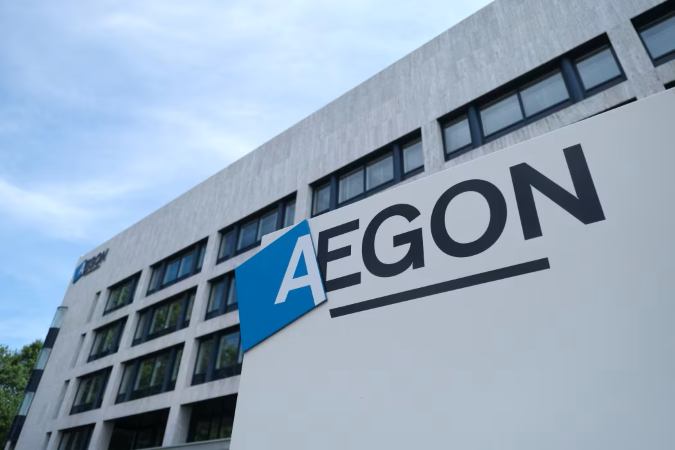
The transaction combines two major players in pensions and insurance. It will give the enlarged group around 16 million customers and roughly £480 billion in assets under administration.

Aegon will receive £750 million in cash and a 15.3% stake in Standard Life. It will also secure a seat on the board, becoming the largest shareholder.

Integration risks

The scale of the deal brings immediate execution challenges. Standard Life must integrate millions of customers, multiple platforms and legacy IT systems.

Such integrations are rarely smooth. Systems may clash. Processes may overlap. Service disruption is a key risk.

Any issues could affect customer confidence. In long-term savings, trust is critical. Even short-term failures can lead to lasting damage.

Financial pressure

The deal is funded through cash, debt and new shares. This increases financial complexity.

Standard Life is betting on cost savings and growth. But these gains are not guaranteed. If synergies fall short, returns may weaken.

Share issuance will dilute existing investors. Debt levels may rise. Market volatility adds further uncertainty.

For Aegon, the transaction will support debt reduction and shareholder returns. But it is expected to reduce its solvency ratio, highlighting a trade-off between liquidity and financial strength.

Strategic trade-offs

Aegon is exiting a major market as part of a wider shift towards the US. This reduces its exposure to the UK but also limits diversification.

At the same time, it retains a significant stake in the combined business. This leaves it exposed to future performance without full control.

The governance structure could create tension. Aegon will have influence at board level, but Standard Life will drive strategy.

The deal reflects a broader push for scale in the pensions sector. But as with many large mergers, success will depend on execution.

For both companies, the outcome remains uncertain.

Insurify rolls out ChatGPT Insurance App, fuelling AI disruption fears

0

Insurify has launched what it says is the insurance industry’s first insurance comparison app built for OpenAI’s ChatGPT app directory, allowing consumers to compare auto insurance options directly through conversational AI (Artificial Intelligence).

The launch marks a notable step in the integration of generative AI into consumer financial services.

Chat-based quotes replace Search

The app enables users to interact with Insurify inside ChatGPT to receive personalized insurance estimates based on basic driver and vehicle information.

Powered by Insurify’s proprietary dataset of historical quotes and customer reviews, the tool shifts insurance comparison away from traditional web searches toward real-time, AI-driven dialogue.

Markets reacting to AI threat

The move sparked investors’ concern over the future of established comparison platforms.

Shares in Mony Group, owner of MoneySuperMarket.com, fell sharply as markets assessed the potential for AI tools to divert traffic, weaken pricing power and compress commission-based revenues across the sector.

Pressure on comparison & broker models

Analysts say Insurify’s launch highlights how generative AI could disrupt insurance distribution by automating discovery and comparison — roles historically dominated by brokers and price-comparison websites.

While complex and commercial policies may remain less exposed, personal lines such as motor insurance are seen as increasingly vulnerable.

AI redraws competitive landscape

The development comes amid broader unease in financial markets over AI’s impact on incumbents, with insurers and intermediaries under pressure to invest in AI capabilities or risk disintermediation.

For consumers, AI-led comparison promises speed and transparency; for the industry, it signals faster structural change driven by technology rather than regulation.

Verdi Union opposes Commerzbank’s potential cross-border merger, regardless of bidder nationality

0
German trade union Verdi would oppose a cross-border merger for Commerzbank even if the bidder was not an Italian bank like UniCredit, an official said on Saturday, Reuters reports. Berlin was taken aback by UniCredit’s swoop to build a large stake in state-backed Commerzbank, a move the Italian bank says could lead to a merger. Officials told Reuters on Friday that Germany is working to frustrate a possible takeover that could tie Berlin’s fortunes to those of heavily indebted Italy. “(Our opposition) is not due to the fact that (the bidder) is an Italian bank. It could be French or Spanish,” Frederik Werning, a Verdi labour union official and a member of the Commerzbank Supervisory Board, said in an interview with Italian broadcaster La7. “When a merger happens every time, they say that nothing will change but one out of two times they don’t keep their promise, and jobs would be lost both in Germany and in Italy”. The merging banks would for at least two years be preoccupied with integration at a time when Germany needs to boost investment, Werning added. “If the takeover happens, UniCredit and Commerzbank will have to take care of themselves for years and they will no longer be strong partners for their clients, neither in Italy nor in Germany,” he added. At the heart of Germany’s concern is UniCredit’s 40 billion euros ($44 billion) holding of Italian government bonds. Commerzbank, which is smaller and financially weaker than UniCredit, also has billions of euros of Italian bonds.

A European Banking Union in the making

For a decade, European leaders have aimed to strengthen cross-border banking integration under a scheme named the Banking Union. Under the union, banks can merge with others into creating larger ones that are less dependent on their home governments within Europe. This is critical for boosting efficiency and reducing risks. The initiative is closely tied to the EU’s Capital Markets Union, as fragmented financial markets are seen as barriers to growth. Former ECB President Mario Draghi highlighted this issue, noting that JPMorgan Chase is worth more than Europe’s top 10 banks combined. Proponents like Karel Lannoo of CEPS believe mergers, such as UniCredit’s interest in Commerzbank, are necessary to unlock Europe’s financial potential. However, German Chancellor Scholz opposes the deal, concerned about foreign influence, especially after UniCredit increased its stake. Critics like Italian MEP Irene Tinagli argue that the Banking Union seems to benefit aggressive takeover strategies, leaving other banks vulnerable.

Fitch revises France’s credit rating outlook to negative

0
Credit ratings agency Fitch has revised France’s outlook to negative from stable on Friday, citing increases in fiscal policy and political risks. “This year’s projected fiscal slippage places France in a worse fiscal starting position, and we now expect wider fiscal deficits, leading to a steep rise in government debt towards 118.5% of GDP by 2028,” Fitch said in a statement, while maintaining France’s rating at “AA- France’s public finances have sharply deteriorated this year as tax income fell short of expectations and spending exceeded them, leaving French debt at risk of a ratings downgrade. The government presented a 2025 budget on Thursday that aims to reduce the hole in the public finances by €60 billion euros ($65.5 billion) through spending cuts and tax hikes focused on the wealthy and big companies. “The 2025 budget that we just presented reflects the government’s determination to put the public finances on a better path and get debt under control,” Finance Minister Antoine Armand said in a statement. Fitch said that high political fragmentation and a minority government complicate France’s ability to deliver on sustainable fiscal consolidation policies.

Russia corporate bankruptcies soaring as sanctions starting to bite

0
Russian businesses are facing increasing financial distress with a record increase in the number of companies going bankrupt at the start of 2024, the Russian business daily Kommersant reported on Thursday. According to data from the Unified Federal Register of Bankruptcy Information (EFRS), 571 companies in Russia declared bankruptcy in January 2024 — a 57% increase from a year ago. In February, a 61% increase in bankruptcies was observed compared to last year when 478 businesses did the same. The increase at the beginning of the year is the first significant increase since early 2021. At that time, the number of corporate bankruptcies in Russia saw a 9.2 percent increase. The trend began to decline over the next 2 years before the recent surge. Financial experts believe that this surge in bankruptcies was expected after Russia reversed a moratorium on such filings. In the wake of the COVID-19 pandemic, on April 1, 2020, Russia introduced an amendment to its Bankruptcy Law giving the government the authority to impose a temporary moratorium on the filing of bankruptcy petitions against certain legal entities and individuals if certain “extraordinary circumstances” exist. Since then, Russia has imposed two moratoriums on bankruptcy filings. First prohibition was introduced to mitigate the impacts of the pandemic and was lifted at the back end of 2021. However, just months later, Russia invaded Ukraine inviting coordinated economic sanctions from Western countries. On 1 April 2022, another moratorium was imposed for a period of 6 months that lasted till October of that year. Russia’s first deputy economy minister, Ilya Torosov, told Kommersant that this signals a return to pre-pandemic levels. A similar trend has been observed in the West where corporate bankruptcies increased rapidly last year after a cooling-off period. According to a report by the Financial Times, the number of corporate bankruptcies in the US increased by 30% owing to high rates and an end to COVID-19 aid. Similar rates were observed in Europe with Germany seeing a bankruptcy increase of 25%, while in France, the Netherlands, and Japan, the increase remained above 30%.

Russia in a Worse Situation

While bankruptcy rates observed in Russia are twice that of their Western counterparts, the bigger problem for Vladimir Putin’s regime is the tightening of Western trade restrictions. There is little to no trade on the government level and secondary sanctions have hit companies doing business with the country. The US embassy in Vienna announced on Wednesday that treasury official Anna Morris will this week warn Austria and Raiffeisen Bank International of the dangers of doing business in Russia. Morris, who has focused on illicit money flows during her time in the office, will encourage banks in Austria to examine their Russian exposure and “take mitigation measures”. The warning is part of a renewed push by Washington on sanctions enforcement.

Putin Looks for Answers

With one eye on the upcoming elections, Vladimir Putin has announced a new lifestyle improvement program promising Russians billions of dollars in healthcare and infrastructure improvements. Putin’s plan could cost $130 billion more than the current budget and it remains unclear how Russia will manage those funds in a turbulent economy. As per the Moscow Times, Putin is pondering over changes to the tax system that will allow Russia to get more out of high-income individuals and businesses. “I propose to think through approaches to modernizing our fiscal system to more equitably distribute the tax burden towards those with higher personal and corporate incomes,” Putin said at his state-of-the-nation address on Thursday. Even if Putin’s latest plan works out, it is difficult to see how it will generate enough funds to support a dwindling economy and a prolonged war effort. It seems that Putin’s promises of lifestyle improvements are political shenanigans before Russia’s presidential election is set to take place on the 15 March. Despite a torrent of economic challenges, Putin is expected to win the election and remain president for another six-year term.  

The Body Shop appoints administrators for UK business, with hundreds of jobs at risk

0
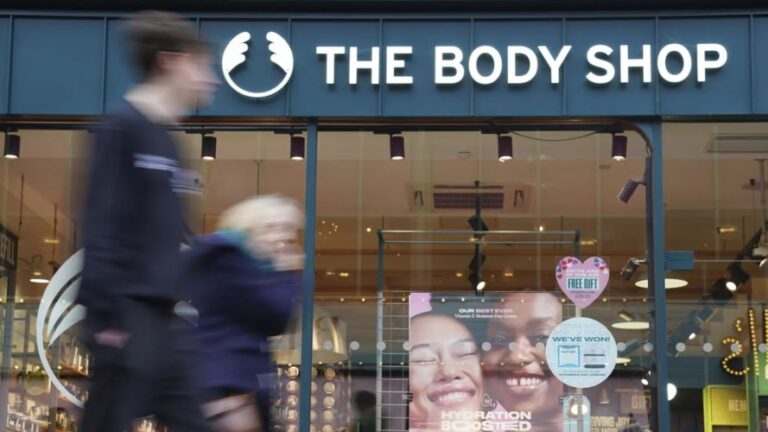
  The Body Shop, which runs more than 200 shops across the UK, has gone into administration just weeks after new owners took over operations of the cosmetics chain. The owners have appointed accounting firm FRP Advisory to oversee the restructuring process. The decision comes amid years of financial struggles and increasing competition in the UK market. According to the Financial Times, consumers had fallen out of love with The Body Shop with the company posting six consecutive quarters of losses prior to going into administration. The insolvency experts from FRP Advisory will have to find a way to slash costs significantly, putting at risk thousands of people with jobs in the cosmetics chain. “The Body Shop has faced an extended period of financial challenges under past owners, coinciding with a difficult trading environment for the wider retail sector,” FRP said in a statement. The Body Shop currently has 200 stores across the UK but almost half of those will now have to be closed to cut costs. This may lead to a loss of over 2000 jobs. “Administrators will now consider all options to find a way forward for the business and will update creditors and employees in due course,” FRP added in its statement.

The Body shop went downhill since takeover

The decision to go into administration comes as a shock to many industry experts as European private equity firm Aurelius had just secured a £207m deal to buy The Body Shop from Brazilian cosmetics giant Natura & Co. The deal was agreed way below the £500 million asking price and at about 20% of what Natura had paid Loreal in 2017. The new owners had only taken over operations at the start of the new year, so a swift collapse wasn’t expected. In the weeks since the takeover, the retailer has also closed its The Body Shop At Home service, which had been struggling financially for quite some time. According to Aurelius, the decision was necessary to save the future of the brand since the company had much lower working capital than initially thought. Sales over Christmas and in early January were also lower than expected which proved to be the final straw. Aurelius has also sold many of the Body Shop’s European and Asian businesses to an unnamed investor. However, the insolvency proceedings will not affect the brand’s global operations which span 70 countries. It should also be noted that while The Body Shop will cut down operations massively, it is unlikely that the brand will go completely out of business. This will only be a restructuring process where the administrators will try to capture younger consumers while also expanding their operations online. The business will most likely be cut down to 100 stores with Aurelius being the front-runner to buy the curtailed operations. However, the administrators have made it clear that they have been in touch with other potential bidders. The Body Shop was founded in 1976 and immediately gained popularity not just for its products but for how they were sourced. It became one of the first companies to promote ethical consumerism, where cosmetics and skincare products are produced without being tested on animals. Over the next 3 decades, it became arguably the biggest cosmetics retailer in the UK. In 2006, the family business was bought by French beauty giant L’Oreal in a £650 million deal. Sales started to drop in the years that followed due to increasing competition in the sustainability, and natural beauty space. While the business will survive for now, the decision to move into administration comes as a major blow to the chain’s workforce and loyal customer base.

Insurer Travelers grows Q4 profits on underwriting gains and lower cat losses.

In a strong finish to the year, Travelers Companies announces a significant increase in fourth-quarter profit on Friday, sending its stock 6.7% higher at market close. Travelers credits the record-breaking profits to a combination of higher underlying underwriting gains, lower catastrophe losses, and higher investment returns. The insurer’s net income surged to $1.63 billion for the quarter ended 31 December 2023, doubling from $819 million, in the same period the previous year.

Underwriting Performance

The insurer’s combined ratio, a key metric that measures profitability, showed remarkable progress, decreasing from 94.5% to 85.8%. A combined ratio below 100% indicates that the insurer earned more in premiums than it paid out in claims. This reduction in the combined ratio underscores Travelers’ ability to effectively manage risk and control expenses.

Cat Losses & Reinsurance

The insurer’s catastrophe losses, net of reinsurance, dropped to $125 million, which is a substantial decline from $459 million in the year-earlier period. Catastrophe losses primarily resulted from wind and hailstorms in multiple states, as well as a winter storm. This decrease in catastrophe losses reflects Travelers’ enhanced risk management strategies in addition to recent quota share reinsurance agreement with subsidiaries of Fidelis Insurance Holdings. Reinsurance plays a crucial role in managing catastrophe risks for insurance companies. By transferring a portion of their risks to reinsurers, insurers can protect their balance sheets and enhance their ability to absorb losses.

Travelers’ Investment Returns

Travelers‘ investment portfolio also played a significant role in bolstering its fourth-quarter profits. Net investment income increased by 24% to $778 million from $625 million a year earlier. This surge in investment returns can be attributed to favorable market conditions, including a rally in US equity markets and robust gains across investment portfolios. The Federal Reserve’s indication of potential interest rate cuts in 2024 spurred a rally in US equity markets, with the benchmark S&P 500 closing approximately 24% and reaching record highs. This positive market sentiment extended to other asset classes, benefiting Travelers’ investment portfolio, and contributing to its strong financial performance.

Full-Year Performance

Besides, Travelers’ impressive financial results extend beyond the fourth quarter. The company reported a full-year core income of $3.1 billion, underscoring its resilience and strong business fundamentals.
Travelers’ CEO Alan Schnitzer
“We are also pleased to have delivered full-year core income of $3.1 billion … notwithstanding elevated industry-wide catastrophe losses and an operating environment for our personal insurance business that, while improving, was difficult during the year,” CEO Alan Schnitzer said in a statement. The Board of Directors declared a regular quarterly dividend of $1.00 per share.

Amazon wins €250M tax fight with the EU

0
US ecommerce giant Amazon doesn’t have to pay a €250 million euros (roughly $270 million) penalty in back taxes after a favorable ruling from the EU’s top court. In a press release on Thursday (14 December), the European Court of Justice (ECJ) upheld the General Court decision that Amazon did not benefit from an undue reduction in its tax burden. The decision lands a significant blow to the European Commission’s efforts to curtail favorable tax deals between member states and big companies. The 27-member bloc had hoped that stricter tax regulations would push corporations to pay more and assist post-pandemic recovery plans. The Court of Justice says that the Commission had incorrectly defined the “reference system” of laws that applied to the situation and that certain EU rules weren’t part of Luxembourg’s national tax code. The court concluded that “the Commission decision had to be annulled in any event.” “The Court of Justice confirms that the commission has not established that the tax ruling given to Amazon by Luxembourg was a state aid that was incompatible with the internal market,” the court further said in its statement. The ruling on Thursday is final and cannot be appealed against. Amazon heralded the ruling as a landmark victory that acquits the company of any tax avoidance charges. “We welcome the Court’s ruling, which confirms that Amazon followed all applicable laws and received no special treatment. We look forward to continuing to focus on delivering for our customers across Europe,” said an Amazon spokesperson.

EU ruling impacts

The ruling can potentially hurt EU competition commissioner Margrethe Vestager’s increasing efforts to crack down on internal tax havens in the EU. Ever since Vestager was appointed, deals between individual countries and companies looking to establish their EU headquarters have come under increased scrutiny. The case against Amazon dates back to 2017 when Vestager charged Amazon with unfairly profiting from special low tax conditions in Luxembourg. The European Commission argued that Luxembourg allowed Amazon to shift profits to a tax-exempt company and ordered Amazon to repay €250 million in unpaid taxes. “Luxembourg gave illegal tax benefits to Amazon. As a result, almost three quarters of Amazon’s profits were not taxed,” Vestager told Reuters at the time. Amazon and Luxembourg challenged the Commission’s decision before the EU’s lower court, the General Court, that same year. After lengthy deliberations, the General Court ruled in Amazon’s favor in 2021. The court annulled the EU Commission’s decision because they could not prove that Luxembourg had granted a “selective advantage” in favor of Amazon. The Commission then submitted an appeal against the ruling to the European Court of Justice. The decision by the European Court of Justice comes days after another loss for the EU in a similar dispute. Earlier this month, French utility Engie won a court battle against an EU order to pay €120 million in back taxes to Luxembourg. These decisions may set the precedent for other tax disputes between the EU and mega-corporations. Most notable are the Commission’s efforts to make Apple pay €14.3bn in tax to Ireland. The ECJ is expected to make a decision in that case by March next year. The Amazon case is C-457/21 P Commission v Amazon.com and Others.

Binance falls, pays $4.3B fines over failures to prevent money laundering

The world’s largest cryptocurrency exchange, Binance.com, has pleaded guilty to multiple federal charges and has agreed to pay over $4 billion, according to the US Department of Justice press release. The investigation into Binance related to the Bank Secrecy Act (BSA), failure to register as a money-transmitting business, and the International Emergency Economic Powers Act (IEEPA). Binance’s founder and CEO, Changpeng Zhao (CZ), has also pleaded guilty to failing to maintain an effective Anti-Money Laundering (AML) program and has resigned as CEO of Binance. He will pay a $200 million fine of his own. It is the biggest-ever corporate resolution that includes criminal charges for an executive. “Binance became the world’s largest cryptocurrency exchange in part because of the crimes it committed – now it is paying one of the largest corporate penalties in US history,” said Attorney General Merrick B. Garland.

Binance’s list of criminal charges is long

Founded in 2017, Binance focused on attracting high-volume customers around the world and quickly became the largest cryptocurrency exchange in the world. Binance customers are mostly US citizens which meant that the exchange was subject to several regulations. Binance was required to register with the Treasury’s Financial Crimes Enforcement Network (FinCEN) as a money service and implement an effective AML program to prevent money laundering through the platform. However, Binance did not implement comprehensive Know-Your-Customer (KYC) protocols or systematically monitor transactions. Binance never filed a suspicious activity report with FinCEN and allowed users to open accounts and trade without submitting any identifying information except for an email address. Due to lax security protocols, between August 2017 and October 2022, US users conducted trillions of dollars in transactions on the platform, generating over $1.6 billion in profit for Binance. Binance also needed to implement controls that would prevent US customers from conducting transactions with customers in sanctioned jurisdictions, such as Iran. But despite knowing that the system it used to match customers for transactions would cause forbidden transactions, Binance failed to take any remedial steps. Because of this intentional failure, between January 2018 and May 2022, over $898 million were exchanged in trades between US users and residents in Iran. “Binance turned a blind eye to its legal obligations in the pursuit of profit. Its willful failures allowed money to flow to terrorists, cybercriminals, and child abusers through its platform,” said Secretary of the Treasury Janet L. Yellen.

Binance agrees guilty plea settlement

As part of the plea agreement with the Department of Justice, Binance has agreed to forfeit over $2.5 billion and to pay a criminal fine of over $1.8 billion. Binance separately has also reached agreements with the Commodity Futures Trading Commission (CFTC), FinCEN, and Office of Foreign Assets Control (OFAC). Deputy Attorney General Lisa O. Monaco said that the charges, guilty plea, and the financial penalty “sends an unmistakable message to crypto and DeFi companies” that you must obey US laws if you serve US customers. Changpeng Zhao, Binance’s founder and CEO, admitted that he understood that Binance was required to register with FinCEN and implement an effective AML program. However, he told employees it was “better to ask for forgiveness than permission,” and prioritized Binance’s growth over compliance with US laws. Zhao has agreed to a separate plea deal with the prosecutors. He will pay a fine of $50 million. In addition to the criminal fine, Zhao will pay $150 million in civil penalties. Zhao is stepping down from his role as CEO of Binance. He announced on X that Binance’s former global head of regional markets, Richard Teng, would be immediately taking over. The former chief faces a maximum of 10 years behind bars, though his ultimate sentence will likely be far lower. Despite the criminal proceedings, Zhao will keep his majority share of Binance. However, he won’t be allowed to be an executive within the company. “While Binance is not perfect, it has strived to protect users since its early days as a small startup and has made tremendous efforts to invest in security and compliance,” the company said in a statement Tuesday. Zhao’s guilty plea makes him the second high-profile cryptocurrency exchange CEO to be prosecuted in recent weeks. Earlier in November, a New York federal court jury found Sam Bankman-Fried guilty on seven charges of fraud and conspiracy. US authorities hope that the guilty pleas of high-profile people will bring some order to the volatile crypto industry.