Italy’s financial police on Monday seized more than $835 million from accommodation-sharing service Airbnb for alleged tax evasion, according to a report from Reuters.
It is the latest sign of the increasing scrutiny of short-term rentals like Airbnb in Europe and the United States.
A judge in Milan authorized the seizure after the company failed to comply with laws requiring Airbnb to pay Italian tax authorities 21% of landlords’ rental income in the country. The seizure order covers the period from 2017 to 2021.
Airbnb spokesperson Christopher Nutly said that the firm had been working to resolve the matter with the tax authorities since June.
“We are surprised and disappointed at the action announced by the Italian public prosecutor on Monday,” said Christopher Nulty. “We are confident that we have acted in full compliance with the law and intend to exercise our rights with respect to this issue.”
As a part of the tax probe, prosecutors in Milan are also investigating three people who held managerial roles at Airbnb from 2017 to 2021.
Under a 2017 law, landlords in Italy must forward information from their rental contracts to tax authorities and withhold 21% from the rental income, and pay it to tax authorities.
Airbnb unsuccessfully challenged the law in 2022 arguing that Italy’s tax requirements for short-term rental providers violate the European Union’s principle of freedom to provide services across the 27-country bloc.
The Court of Justice of the European Union (CJEU) later ruled that member states were free to collect income taxes from short-term rental platforms.
“EU law does not preclude the requirement to collect information or to withhold tax under a national tax regime,” the court said in a statement.
The law also provides that non-resident persons who do not have a permanent establishment in Italy are obliged to appoint, in their capacity as persons liable to pay the tax, a tax representative.
In its ruling, the top EU court disagreed with this obligation.
“However, the obligation to appoint a tax representative constitutes a disproportionate restriction on the freedom to provide services”, the court added.
Airbnb continues to contest the law calling it “inherently complex and uncertain” while maintaining that it is not subject to it.
Italy declares war on tax dodgers
The move to seize Airbnb funds is the latest in a series of efforts by Italian and European authorities to crack down on the tax practices of global companies.
In 2019, Italian prosecutors probed Netflix Inc. after the US streaming company failed to file a return. Netflix later agreed to pay more than $59 million to settle the tax dispute related to penalties and interest from October 2015 through 2019.
Earlier this year, Milan prosecutors started investigating Facebook owner Meta Platforms in a similar tax probe that can turn up a $925 million tax bill.
The latest move to go after Airbnb for alleged tax evasion had been expected. Towards the end of last month, Italy announced a crackdown on landlords who did not pay taxes on short-term rentals through platforms like Airbnb.
The co-ruling Forza Italia party said the country would move to introduce a national identification code for short-term rentals, a move that could boost revenues by 1 billion Euros.
“That code will bring out the revenue of those who rent flats without declaring them. This will lead to more money in the state coffers which will go to reduce the tax burden,” Deputy Prime Minister and Forza Italia leader Antonio Tajani told reporters.
Italy is not the only country to clamp down on Airbnb. Countries like Malaysia, Austria, and the US have all put restrictions on similar businesses in recent months.
The platform, which enables people to rent out their homes or spare rooms to tourists, has been accused of inflating house prices, pushing out locals, and fueling overtourism.
Helvetia Global Solutions has received confirmation from UK regulators that its authorization to underwrite non-life insurance business in the UK has been approved and comes into effect on 1 November 2023.
The authorization includes the underwriting of international risks in the specialty lines business, such as General Aviation and Marine business.
The opening of the branch is in response to Brexit, where UK business can only be underwritten on a freedom of services basis until 31 December 2023.
Helvetia already offers very successful specialty lines cover in the UK thanks to experienced underwriting teams that was previously in place. The regulatory approval will allow the insurer to continue the business.
Helvetia has appointed Marc Davis as CEO of the UK branch, who joined the company on 1 October 2022 and holds extensive experience in the insurance industry.
He has previously served as Country Manager UK and Ireland for Swiss Re Corporate Solutions, as Commercial distribution director at RSA, and as head of sales & marketing at Marsh’s IRM division in the UK.
David Ribeaud, CEO, Specialty Markets of Helvetia Group commented, “With Marc Davis, we have gained a very experienced professional who will support the successful establishment of the UK branch as well as the assessment of local business opportunities in the UK in alignment with our strategy.”
As of year-end 2022, Helvetia Global Solutions’ gross written premiums (GWPs) were around EUR 508 million. The insurer manged to generate a profit of EUR 6.9 million which is an 65% significant increase compared to the previous year.
Partner-business and GEPS (Global Engineering & Property Solutions) segments were the most lucrative generating each more than 40% of the profits.
The projected specialty lines premium volume of the UK branch for 2023 amounts to around EUR 50 million.
Helvetia has an “A” rating with stable outlook from S&P Global Ratings (S&P). The rating also applies to the UK branch.
Social media platform X, formerly known as Twitter, has started testing a new subscription method for new users in two countries, the company said on Tuesday.
The new model is dubbed “Not a Bot” under which new users in New Zealand and the Philippines will be charged a $1 USD annual fee for basic features. This includes features such as Liking and Bookmarking posts, Replying, Reporting, or Quoting other accounts.
New users who don’t get the paid subscription will only be able to take “read-only” actions, such as: Read posts, Watch videos, and Follow accounts.
X also said that the model was developed to combat bots and spammers while improving the user experience as a whole.
“This new test was developed to bolster our already successful efforts to reduce spam, manipulation of our platform, and bot activity, while balancing platform accessibility with the small fee amount. It is not a profit driver,” the company said.
New accounts in the two countries will also be required to verify their phone number. A move that has raised eyebrows amid privacy concerns. This can also be a step towards making X an “everything app” – an idea Elon Musk, the owner of X, has floated for a long time.
Musk was quick to tweet about the change, writing: “Read for free, but $1/year to write. It’s the only way to fight bots without blocking real users. This won’t stop bots completely, but it will be 1000X harder to manipulate the platform.”
“Not a Bot” is a beta program with varying fees from country to country based on the exchange rate. It remains unclear if, or when, the payment plan will be expanded to users in other countries.
Elon Musk first talked up the idea of a small monthly payment when he met with Israeli Prime Minister Benjamin Netanyahu last month.
He said that bots cost “a fraction of a penny” to set up, but their effective cost on the platform is very high.
“A new payment method every time you have a new bot”, Musk told Netanyahu.
It should be noted that the program is different from X Premium, which offers users a blue verification tick with extra features like “undo” and “edit” for posts. The service is available for $8 USD a month to most users. However, the service has so far failed in curbing spam. If anything, the launch of a premium subscription turned out to be a mini disaster as several bots paid for verification badges.
Is X new subscription model a profit driver?
Ever since Elon Musk took over Twitter, the company has struggled for revenue sources. Many advertisers have ended their partnership with X due to concerns over hate speech and the loosening of content moderation efforts.
By Elon Musk’s own admission, ad revenue has since declined by over 50% and the company has struggled to break even. Elon Musk and his team need to make up for these losses and pay off a $13 billion debt acquired to buy Twitter.
It seems like this latest move is aimed at making up some of the losses incurred over the last year. Musk has since roped in former advertising executive Linda Yaccarino as CEO of X, however, it seems that the two of them are yet to agree on a coherent strategy to halt plummeting revenues. As Elon Musk talks up subscription-based models, Yaccarino seems focused on bringing back advertisers.
Launching “Not a Bot” means that X now has three different subscription plans on offer: the X Premium plan for roughly $8 to $11, and a $1,000 per month Verified Organizations plan that allows companies to verify their employee accounts.
Cisco Systems is set to buy cybersecurity firm Splunk in a deal worth $28 billion, the company said Thursday. This will be Cisco’s biggest-ever purchase and its fifth acquisition of 2023.
Cisco CEO Chuck Robbins expressed the rationale behind the company’s latest push into AI and software security space this year.
“Our combined capabilities will drive the next generation of AI-enabled security and observability,” he said. “From threat detection and response to threat prediction and prevention, we will help make organizations of all sizes more secure and resilient.”
The deal will also help Cisco expand its software and services business enabling the company to rely less on its traditional networking hardware. Cisco ended fiscal 2023 with Q4 revenue at $15.2 billion, up 16% year over year. The next step for the company is innovating in key areas like AI, security, and cloud.
Cisco remains the largest maker of computer networking equipment and has recently been strengthening its cybersecurity business to meet customer demands. Splunk’s capabilities in the Artificial Intelligence (AI) space will become an integral part of Cisco’s efforts to provide leading security analytics and coverage.
Splunk first rose to prominence in 2020 when companies worldwide moved towards remote work and invested heavily in cybersecurity technology. However, the company’s stock has been falling since then and even reported a $278 million loss during its last fiscal year, according to Forbes.
Cisco is still betting large on AI-powered growth and also made an effort to buy Splunk last year. The news of a potential deal was reported by the Wall Street Journal before the talks broke down. Cisco waited another year, and the move has finally materialized.
Cisco has agreed to pay $157 per share in cash to acquire Splunk, which is 30% higher than Splunk’s share price today but also 30% lower than Splunk’s all-time high of $223 in September 2020.
The deal represents 13% of Cisco’s market cap on Friday, a massive number compared to the company’s deals in the past. Before acquiring Splunk, Cisco’s biggest-ever purchase was the $6.9 billion acquisition of telecommunications company Scientific Atlanta in 2006. At the time, Cisco’s market cap was close to $100 billion.
The deal won approval from the boards of both companies and is expected to close by the third quarter of 2024. It still needs approval from Splunk shareholders. If Cisco walks away from the deal or if it is blocked by regulators, Cisco will pay Splunk $1.48 billion. If the deal falls through on Splunk’s end, it is bound to pay a $1 billion termination fee to Cisco.
The news of the deal had a contrasting impact on the shares of the two companies. Splunk shares were boosted up to 21%, while Cisco shares were down by 4% on Friday.
Cisco has acquired or plans to acquire 10 companies this year with five focused on security. It has already closed deals with threat detection platform Amorblox; identity management platform Oort; Valtix and Lightspin, both of which work on cloud security.
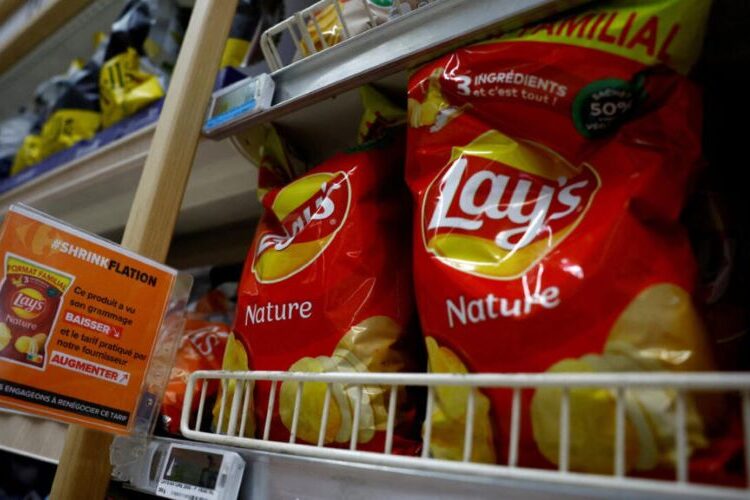
French grocery chain Carrefour has started to add warning labels on products that have changed due to “shrinkflation” — a phenomenon where manufacturers reduce the quantities sold per pack rather than increasing prices. By doing so, manufacturers conceal inflating prices from the consumers.
Since Monday, Carrefour has marked 26 products in its stores with the new labels that read: “This product has seen its volume or weight fall and the effective price from the supplier rise.”
The move will impact firms like PepsiCo, Nestle, Unilever, and comes ahead of negotiations between big brands and retailers due to start soon as CNN reports.
Carrefour chief executive, Alexandre Bompard, has piled up pressure on consumer goods companies in recent weeks, accusing them of not cooperating in efforts to cut down prices despite a fall in the cost of raw materials.
Bompard announced the initiative on French television himself. “This way we have the most reliable information possible for consumers because it is unacceptable to do this to consumers,” he said.
Carrefour has also cited examples of products that have reduced in quantities despite the prices going up. One such is Nestle’s infant milk formula marketed as Guigoz, that has gone from a pack size of 900 grams to 830 grams.
Another one is PepsiCo manufactured pack of Doritos that has shrunk by 10 grams while the price per kilo went up 19%.
Carrefour shrinkflation warnings
BFM Business, top French business news channel, obtained a list of products affected by “shrinkflation”. A total of 122 products from major brands, the majority being crisps, mayonnaise, and a variety of other drinks, will be impacted by this move.
According to Stefen Bompais, director of client communications at Carrefour, the move will force brands to rethink their pricing. “Obviously, the aim in stigmatizing these products is to be able to tell manufacturers to rethink their pricing policy,” Bompais said in an interview.
Like many of its European counterparts, France has been dealing with an onset of inflation since the start of 2022. Food prices in particular have soared to unprecedented levels, with inflation reaching an all-time high of 15.90% in March 2023. Since then, the government has been trying to ease the burden on consumers.
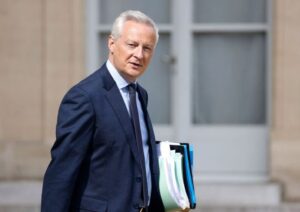
The pushback against “Shrinkflation” is headed by the French finance minister, Bruno Le Maire who has previously called it a “disgrace”. In June, Le Maire invited 75 big retailers to his ministry urging them to cut prices. Those meetings have continued since with Le Maire calling out Unilever, Nestlé, and PepsiCo as the companies that were not doing enough to rein in prices.
Bruno Le Maire French finance minister
Carrefour’s decision comes days after the finance minister announced on French TV that manufacturers will be legally obligated to notify consumers of any reduction in product content while retaining or increasing the price.
Carrefour is one the largest retailers in the world by revenue and has close to 12,000 stores worldwide. However, the shrinkflation warnings will only be observed in the company’s 5,700 stores across France.
The retailer could extend warnings to other foods but has no plans of extending the program to other countries.
While many have applauded the move, some notable critics see this as nothing more than a PR stunt since Carrefour itself has been involved in deceiving shoppers through shrinkflation. The strategy also risks damaging relationships between retailers and food firms.
The initiative hits only about 122 products out of 20,000 food references in a supermarket. This is why it is being seen as more of a pressure tactic ahead of the annual negotiations between consumer goods companies and retailers.
The annual negotiations that usually take place at the start of the year have been brought forward to September and will continue till 15 October. Le Maire hopes that the talks will result in price cuts from January.
Birmingham city council which serves more than 1 million people has declared itself “effectively bankrupt” amid “unprecedented financial challenges”.
The council announced on Tuesday that it has now issued a section 114 notice after failing to meet its financial liabilities.
The Labour-run council may have to cut back on all non-essential services and may even have to raise taxes to balance the books. Services that could face budget cuts include street cleaning, parks and maintenance, libraries, and even the frequency of bin collections.
The crisis has been a decade in the making with the local government body struggling to settle equal pay claims amounting to £760 million. These claims were initiated after a landmark Supreme Court Judgement in 2012.
The court ruled in favor of female employees who said they were not paid the same bonuses that were awarded to men on the same pay grade.
Earlier this year, the council revealed it had already paid over a billion pounds in equal pay claims over the last 10 years. The council also announced potential liabilities of up to £760 million which were rising at a rate of £5m to £14m per month.
Even though the city is struggling, it must still find a way to fund the remaining claims.
“The legal bill is one of the biggest challenges this council has ever faced. It means there will be significantly fewer resources available in the future compared to previous years and we will need to reprioritize where we spend taxpayers’ money,” the council said in June.
The Council has also blamed successive budget cuts of over £1 billion over the last decade for this debacle.
A new cloud-based IT system has further compounded the city’s financial issues. It was supposed to cost £19m but costs have escalated up to £100m due to three years of delays and installation problems.
Officials have also pointed to other financial strains ranging from huge increases in adult social care demand and dramatic reductions in business rates income. Add to that the impact of rampant inflation, and it becomes a difficult financial situation.
As a result of this “perfect storm“, Birmingham is facing a budget shortfall of £87m for 2023-24 which is expected to increase to £165m in 2024-25.
It should be noted that Birmingham isn’t the only local council facing this predicament. Councils across England and Wales are struggling to meet the growing demand for basic services.
Birmingham is the fourth city council to issue a section 114 notice in recent times. Woking, Croydon, and Thurrock have made similar announcements over the last 12 months.
With the situation deteriorating across the country, Prime Minister Rishi Sunak’s office has issued some reassuring statements.
“The government for its part has stepped in to provide support, an additional £5.1bn to councils in 23-24, which is more than a 9% increase for Birmingham city council”, the official spokesperson of the prime minister said.
The prime minister’s office has also stressed the responsibility of elected councils to manage their funds responsibly.
“Clearly it’s for locally elected councils to manage their own budgets. The government has been engaging regularly with them to that end and has expressed concern about their governance arrangements and has requested assurances from the leader of the council about the best use of taxpayers’ money.”
Birmingham is one of England’s major cities and a popular sporting venue. The city hosted the Commonwealth Games in 2022 and is scheduled to hold the 2026 European Athletics Championships. However, the economic strain has put a question mark over the city’s ability to hold the event.
The US government’s transportation safety agency has demanded the recall of 67 million airbag inflators after finding they could rupture and injure motorists, Reuters reports.
The National Highway Traffic Safety Administration (NHTSA) said the inflators pose an unreasonable risk of death or injury.
In its letter to auto supplier and airbag inflator designer ARC Automotive, The Agency listed nine incidents where someone in a car had been injured after an airbag inflator ruptured. The letter states that seven of those incidents took place in the United States, and one of those led to a death.
The ARC airbag inflators in question were produced are found in General Motors (GM), Chrysler-parent Stellantis, BMW, Hyundai Motors, Kia, and other vehicles.
On Friday, GM agreed to recall nearly one million vehicles with ARC airbag inflators after a rupture resulting in the driver getting facial injuries earlier in March 2023.
ARC rejected NHTSA’s tentative conclusion that a defect exists saying it is based upon seven field ruptures in the United States. NHTSA “then asks ARC to prove a negative – that the 67 million inflators in this population are not defective” that were produced over 18 years.
The company said it will continue to work with NHTSA and automakers to evaluate ruptures.
British banknote maker De La Rue has warned that its profits will miss full-year forecasts as demand for cash is falling, reaching its weakest level in 20-years, sending shares to record lows on Wednesday.
The struggling company said the downturn in demand for physical currency was also causing ‘significant uncertainty‘ in its outlook and it expects order levels to remain low for the rest of the financial year 2023.
The company is in talks with lenders to seek an amendment to its banking terms due to the worsening outlook and has requested its pension trustee to defer its next deficit contribution of £18.75million ($23.40million).
“The challenge at the moment is that there simply isn’t quite the demand there to be where we want to be, which is disappointing,” CEO Clive Vacher told Reuters.
Covid pandemic impact
Governments and central banks all over the world had stock-piled huge amounts of cash during the pandemic and are delaying new orders as they deplete their stock, De La Rue said.
The drop in demand for notes may also serve as an early sign of a potential global economic downturn as banks need to hold less cash if they cut lending and customers spend less.
Modern notes last longer too. The Bank of England estimates polymer notes circulating in Britain, made by De La Rue, last two-and-a-half times longer their paper equivalents.
Vacher, who launched a turnaround plan for De La Rue in 2020 including an increasing focus on polymer notes, said he expected “progressive recovery” in the next six to 12 months based on current “very high” volume of bids, which would take time to show up as revenue if bids are won.
The over 200-year-old company, which works with governments, central banks, and commercial organisations in more than 140 countries, signalled in November 2022 significant doubts about its ability to continue as a going concern.
De La Rue shares, which have lost more than half of their value so far this year, fell more than 20% to 39 pence on Wednesday to a record low.
The company said it expected adjusted operating profit for the year ended on March 25 to undershoot market expectations by a mid-single digit percentage.
In November, it had warned fiscal 2023 profit would be between 30 million pounds ($37.26 million) and 33 million pounds.
It forecast on Wednesday adjusted operating profit to be in the low 20-million-pound range for its fiscal 2024.
On the positive side, revenue at its authentication business, which designs and makes secure documents as well as security features such as holograms to authenticate goods, is expected to exceed 100 million pounds for the first time in 2024, partly thanks to its Australian passport contract.
After more than 30 years of operation in the country McDonald’s, the first US fast-food restaurant to open in the Soviet Union, is about to exit Russia by selling all its business.
In a statement, the company said that the humanitarian crisis caused by the Ukraine conflict has resulted in an unpredictable operating environment, making it difficult to hold on its business in Russia “is no longer tenable, nor is it consistent with McDonald’s values.”
In early March, the fast-food giant announced it was temporally shutting down its restaurants in the country, suspending operations while promising to continue paying its employees.
McDonald’s intends to flog its entire portfolio of restaurants off to a local buyer. A process otherwise known “de-Arching” which entails no longer using the McDonald’s name, logo, branding, and menu. However, the company will still retain its trademarks in Russia if it decides to come back in future.
McDonald’s opened the doors of its first restaurant in Russia 30 years ago, on Jan. 31, 1990. With 900 seats, it was the largest McDonald’s in the world at the time.
CEO Chris Kempczinski, said, “We have a long history of establishing deep, local roots wherever the Arches shine. We’re exceptionally proud of the 62,000 employees who work in our restaurants, along with the hundreds of Russian suppliers who support our business, and our local franchisees. Their dedication and loyalty to McDonald’s make today’s announcement extremely difficult. “However, we have a commitment to our global community and must remain steadfast in our values. And our commitment to our values means that we can no longer keep the Arches shining there.” Kempczinski added.
Later in an emotional update, Chris expressed his regrets on the Ukraine situation and the humanitarian crisis. He was hoping for peace to return soon to the region which didn’t materialize. He concluded his message by
Thus, let us not end by saying, “goodbye.” Instead, let us say as they do in Russian: До новой встречи. “Until we meet again.”
CEO Chris Kempczinski,
On the other hand, a source at McDonald’s told Russian news agency, restaurants will open in Russia under a new brand in mid-June, while jobs, most suppliers, and the menu will be retained.
“More than 90% of suppliers are Russian, cooperation with them will continue. In fact, only the name will go away,” the source said.
After McDonald’s announcement, the Russian authorities revealed the possibility of replacing the company’s market share with Russian chains. Moscow Mayor Sergei Sobyanin believes that Russian companies can replace up to 250 restaurants in a year.
McDonald’s said it expects to record a charge against earnings of between $1.2 billion and $1.4 billion over leaving Russia.
Its restaurants in Ukraine are closed, but the company said it is continuing to pay full salaries for its employees there.
McDonald’s has more than 39,000 locations across more than 100 countries. Most are owned by franchisees — only about 5% are owned and operated by the company.
McDonald’s said exiting Russia will not change its forecast of adding a net 1,300 restaurants this year, which will contribute about 1.5% to companywide sales growth.
Last month, McDonald’s reported that it earned $1.1 billion in the first quarter, down from more than $1.5 billion a year earlier. Revenue was nearly $5.7 billion.
After Russia launched its special military operation in Ukraine, a number of Western companies suspended their activities in Russia.
Yum! Brands, which owns the KFC and Pizza Hut brands, announced the suspension of investment and development in Russia. Burger King noted in early March that they intend to continue their work, with the opening of new restaurants in the country already planned.
Toshiba, Japanese industrial conglomerate, is holding discussions with potential investors after receiving interests from 10 strategic partners and sponsors.
In late April, Toshiba’s shareholders rejected its own restructuring plan to break up the company into two separate entities. And since then, it’s been looking for potential partners and sponsors to improve Toshiba’s corporate value.
The conglomerate said it provided detailed information on the company’s business and finances after the potential partners had signed confidentiality agreements. Financial dealings between the investors and Toshiba are handled by Nomura Securities who acts as its financial advisor.
Non-binding proposals to the partnership must be submitted by 30 May. After which, Toshiba will announce the total number of interested parties before its next annual general meeting at the end of June.
US private equities interests
The Financial Times reports that US private equity group KKR had approached Blackstone to prepare a joint bid for Toshiba. According to people with direct knowledge of the discussions, the two groups held preliminary talks in recent weeks.
The interest from KKR and Blackstone comes after Bain in April secured qualified support for a buyout deal from Toshiba’s largest shareholder, Singaporean investment fund Effissimo.
The buyout is expected to be led by KKR, although the talks are still in early stages and no formal decision has been reached.
Toshiba’s positive outlook
Toshiba has currently a market value of about $18 billion. On the Tokyo Stock Exchange (TSE) Friday closing time, its shares were 1.10% higher at ¥5,426 ($42). The stock is 20% up since last year.
For the current financial year, Toshiba expects a 7% rise in operating profit to ¥170 billion ($1.3 billion) despite the severe business environment such as the ongoing crisis of Covid and the Ukraine/Russia conflict.
Nonetheless Toshiba forecasts a strong 2022/23 financial year with projected sales of ¥3,337 billion ($26 billion), and therefore it announced a special dividend of ¥160 yen ($1.2) per share.