Ecuador Earthquake: Low Insurance penetration drives tax hike

The 7.8 magnitude earthquake that rocked Ecuador on 16 April inflicted a grave human toll, including more than 600 deaths, 4,500 injuries and more than 25,000 people left homeless. Ecuador earthquake epicente The earthquake, the most powerful to hit Ecuador in a generation, also wrought a level of economic devastation that would have proved problematic at any time for a developing South American country. But Ecuador, the smallest of the OPEC nations, was already in financial crisis, its reserves depleted by historically low crude prices and slumping markets for its banana and flowers exports. Those economic conditions leave the country with only $300 million (£207 million) in an emergency fund, plus a projected $600 million from multilateral lenders, to pay for damages that could approach $4 billion (£2.8 billion). “This isn’t going to take three days or three months,” President Rafael Correa told The Wall Street Journal. “This is going to take years …” Insured losses could range from $325 million to $850 million, according to catastrophe modeling firm AIR Worldwide. The firm noted that those estimates are based on assumptions about earthquake insurance penetration rates in Ecuador, “about which there is considerable uncertainty.” Ecuador’s private earthquake insurance penetration rate is “low, even by regional standards,” according to LatAm Investor, a U.K.-based Latin America-focused investment magazine.
Ecuador earthquake aftermath
Wikimedia Commons – By Agencia de Noticias ANDES
Faced with such a dearth of resources with which to rebuild, the government is resorting to tax increases for the needed capital, raising its value added tax from 12 percent to 14 percent and imposing new income taxes. People with assets worth more than $1 million will pay a one-time assessment equal to 0.9 percent of their wealth, while the masses will contribute a day’s salary. Those earning less than $1,000 per month will make the payment just once, people earning $2,000 a month will pay it monthly for two months, and those earning $5,000 or more monthly will pay it monthly for five months. The government also will sell off unspecified assets. While Ecuador’s earthquake insurance penetration rate is reportedly low, it could be growing, depending on how many Ecuadorian homeowners and businesses are opting to supplement their policies with an earthquake coverage endorsement. Such opportunities have certainly increased in number, as general property insurance penetration in the country grew by 20 percent from 2010 to 2015, according to a report by Timetric. While Correa’s tax increases will likely generate enough revenue to fund reconstruction, the trade and tourism sectors have been hit hard, and there is uncertainty about the country’s economic future. The leftist president’s public welfare spending was robust and popular during the oil boom but the government failed to set aside any reserves for the rainy day that it’s now experiencing. Some analysts worry that the tax hikes will further slow the already struggling economy as costs for materials rise. Also, uncertain is the future of insurance reforms Correa has tried to implement. The government in March 2015 announced that insurance carriers operating in the country may no longer cede more than 5 percent of their premiums to reinsurers outside of the country, an effort aimed at keeping more money in Ecuador. But the insurance industry, which sends up to 50 percent of premiums to foreign reinsurers, has strongly opposed the measure and compliance has been slow. Insurance companies initially were required to meet the new 5 percent threshold by March 2016, but on April 14, just two days before the quake, the government announced an 18-month extension for compliance.

Periodical Payments Orders – The Implications for Insurers

0
Periodical payments orders (PPOs) which are also known as structured settlements, were introduced into personal injury litigation by the Courts Act 2003 and came into effect on 1st April 2005. The new law enabled the court to make a periodical payments order, rather than a conventional lump sum, even if neither the plaintiff nor the defendant had requested it. Therefore, if someone suffers serious personal injuries, such as in a motor collision, and makes a claim against the insurance policy of the person responsible, the compensation they receive may be in the form of either a lump sum or a series of regular lifetime payments – a structured settlement/PPO. As such, the Courts Act 2003 represented a major change to the law regarding the calculation of the amount of compensation in the most serious personal injury cases and brought with it some quite significant implications for the claimant and the insurers involved.

The Motivation behind the Courts Act 2003

The reasoning behind the act was to enhance the compensation payable to claimants by removing the risk that they faced in investing a lump sum, the impact of inflation and the possibility that the lump sum would be insufficient if their longevity had been under estimated when the lump sum was calculated. These risks are, instead, now placed firmly in the hands of the insurers, who are felt to be more capable of bearing them, thus affording greater certainty to the claimant. The implications of this for insurers and reinsurers are quite marked.

Effect on Insurers

The Courts Act 2003 has various implications for insurers in the most serious personal injury claims. These can be summarised as follows:
  • The creation of uncertainty as to how to make provision for what is, in the final analysis, an unknown future cost.
  • The introduction of a commitment that lasts the lifetime of the claimant.
  • The imposition of significant administration costs over the lifetime of the claimant.
  • The inability to match assets with liabilities, impacting on the net real investment return.
  • The impact of retentions on buyers of reinsurance, meaning that the primary insurer may have to self-fund a PPO loss, possibly over a period of many years.
These factors have been added to by subsequent case law, which determined that inflation was to be linked to average earnings and ASHE 6115, rather than the retail prices index (RPI), which has, historically, tended to rise more slowly. Over the lifetime of a claimant this could give rise to a substantial increase in the amount paid under the PPO.

Effect on Reinsurers

Because PPOs are normally awarded in serious or catastrophic injury cases recoverable under a reinsurance excess of loss contract, it is anticipated, as more of this type of order is made, that reinsurers will be called upon to handle a higher percentage of claims than primary insurers. Reinsurers may also run additional risks, such as investment and timing of payment risks and, of course, their administrative cost of claims handling would rise. The financial implications of a PPO were underlined in a recent case, marking the first PPO to be made in Jersey. In that case, the claimant was able to establish liability for a road accident that caused him serious injuries resulting in ongoing behavioural and cognitive problems. The settlement that was ultimately agreed was in the sum of £9 million, part of which was to be paid by way of a lump sum, with the reminder to be paid over the claimant’s lifetime in a series of regular payments through a PPO. The insurer, AXA, would be responsible for maintaining these payments throughout the claimant’s lifetime – a significant commitment.

Addressing the Risks

Traditionally, the risks of longevity, inflation, and investment are managed by the life assurance market and in an ideal world insurers would be able to transfer these risks to that market through purchasing annuities. Regrettably, the UK annuity market is by no means in an optimum state and does not effectively cater for injuries of the severity suffered by those claimants who are awarded a PPO. In the absence of an annuity, the insurer has the option of either using the capital markets or self-funding the PPO, neither of which is an ideal solution to the problem. Although it will not reduce the exposure of insurers and reinsurers to the effect of PPOs a new tool, created by Aon Benfield, enables insurers to calculate their exposure to PPO claims and to assess the extent to which reinsurance might alter the degree of exposure. The ability to make a more detailed calculation of their exposure should assist insurers in analysing capital charges and making better informed strategy decisions with regard to new business and reinsurance.  PPOs clearly provide greater certainty to claimants in serious personal injury cases. They have also introduced challenges to the insurance industry. For those challenges to be successfully overcome, the industry needs to work in a co-ordinated way to find solutions. These should include adopting a greater willingness to take on liabilities and the evolution of reinsurance contracts to shift the balance of power more in favour of purchasers of excess of loss reinsurance.  

Generali launches new property product for US multinationals

Generali, the Italian insurance giant, has partnered with BELFOR Property Restoration to bring a dynamic risk management solution to US-based multinational corporations. The product, Tribune, is set to be a game-changer due to its comprehensive solutions for both American and overseas property exposures. Generali’s innovative partnership with BELFOR means Tribune clients can access a variety of services tailored to the multinational market, without having to place multiple calls to insurance providers around the globe. Instead, the program, which is administered from one central location, ensures Americans’ property insurance needs are met regardless of where their assets are located. Through this partnership, Generali seeks to provide added value for their clients, with features such as cross-border premium transfers, the ability to adjust and settle claims locally and access to a vast network of loss control engineers. Essentially, clients benefit from the consistency and efficiency of Generali’s global network, with a human touch when it comes to local servicing. From the Italians’ standpoint, it will help prevent the kind of international insurance fragmentation that too often plagues multinationals. Tribune clients also have the ability to make use of BELFOR’s ‘Red Alert Priority Response Program, which Generali recommends for loss control and mitigation. As the very nature of multinational corporations, means their assets are spread across the globe, this partnership is uniquely equipped to respond to the types of cross-border risk management issues they can face. Generali, as one of the top insurance companies in the world and the best Italian brand for strength and value, generated a total premium income of €74 billion (£60 billion) in 2015. They have more than 76,000 staff members in 60 countries around the globe. Proving their innovation with products like Tribune is recognized outside of their industry, they were the only insurer featured in MIT’s Technology Review of the “50 Smartest Companies in the World.” The Tribune product has a capacity of $250 million (£200 million) to write commercial property risks for US multinationals, covering their exposure at home and abroad and connecting Americans with Generali’s truly global network. Could Tribune be a game-changer for the insurance industry? Are other insurance companies prepared to follow suit with similar products for businesses that manage assets in their home countries and abroad? Time will reveal which major insurer is next set to follow Generali’s lead.

Ad Blockers risking the collapse of the free Web

0
We have grown used to thinking of the Internet as being free. Simply logging on and we are given all manner of content without having to pay for it. We can read the news, watch videos or chat to our friends via social media without ever having to hand over our credit card details. Of course, that content isn’t really free. It costs money to run a website. You need to pay the web developers who build and maintain the website. You also need to pay the people who produce the content. Although well-known brands, such as FT.com, delivering highly specialised content are able to operate on a subscription-based model, for most content providers this is not an option. Even Facebook, arguably one of the best known online brands, with 1.59 billion active users, would not get away with charging a subscription. Most content publishers have chosen to monetise their online content via advertising. In the last quarter of 2015, Facebook’s advertising revenue was $5.64 billion (£3.9 billion). But that opportunity to generate advertising revenue is at risk due to the rise of the popularity of adblocking software. Last year, Adobe and PageFair released a report showing the number of adblocking software users globally to have reached almost 200 million, up 41% on the previous year. The most popular ad blocking tool used by millions of users globally is Adblock Plus, a tool that comes as an extension/add-on to most web browsers and which has been downloaded over 500 million times. Apple, famous for its bold business moves, has updated its iOS operating system to enable its iPhone and iPad users to block adverts on websites, and mobile network, Three, is planning to introduce adblocking on its UK and Italian networks. The reason for the increase in popularity of this type of software is the fact that online adverts have become increasingly irritating to web users. They complain about pop-up adverts that completely block the content they want to see and give them no obvious way to dismiss the adverts. They don’t like being subjected to large video downloads that slow down their connections and eat into their data allowances. Adverts that carry out excessive user tracking are considered unacceptable at a time when privacy and identity theft are hot topics, and some adverts even contain malware. Adblocking software prevents these adverts from being delivered. For content providers, this is becoming a increasingly frustrating problem. In its report, PageFair claimed that adblocking software cost publishers $22 billion in lost advertising revenue in 2015. The situation has become serious enough that John Whittingdale, the UK’s Culture Secretary, has said that the government stands ready to help in any way it can after hearing all sides of the argument.
forbes adblock welcome message photo
Forbes.com asking politely visitors to disable their ad blocker
In the meantime, a number of content providers such as Forbes are fighting back. They are replacing the content with a message asking their website visitors to disable their adblocking software if they detect that it is being used. Others, such as Wired.com and the German tabloid Bild.de, offer the option to either disabling the software or paying a small subscription to be able to view their content. Initiatives such as the Acceptable Ads Manifesto from Adblock Plus and the Internet Advertising Bureau’s L.E.A.N (Light, Encrypted, Ad choice supported, Non-invasive ads) Ads program are working on scaling back the level of intrusiveness of adverts, on the basis that if the adverts are not excessive, website visitors will have less of an incentive to use adblocking software. However, in the meantime, while it might sound attractive to be able to surf the web without seeing adverts, if a way to deal with adblocking software cannot be found and it becomes impossible to monetize content, there is a very real risk that the content will evaporate. What we have grown used to – a web full of “free” content and information – will have been lost forever.

Trust Re approved as Lloyd’s coverholder

0
Trust Re subsidiary, Trust Insurance Management (TIM) was approved as a Lloyd’s of London coverholder, last week. This allows Trust Insurance Management to write business in the 200+ countries in which Lloyd’s operates, both on an insurance and reinsurance basis. Coverholder status is given to an entity when it is authorised by a Lloyd’s managing agent to enter into contracts of insurance and/or issue insurance documentation on behalf of a syndicate at Lloyd’s. The approval process requires an extensive examination of the company’s underwriting capabilities, processes, systems and procedures. As an approved Lloyd’s Coverholder, Trust Insurance Management is entrusted with binding and claims payment authority on facilities it places in the Lloyd’s market. As Trust Insurance Management is writing on behalf of Lloyd’s syndicates, the capital is rated A+ (Strong) by Standard &Poor’s, A (Excellent) by AM Best, AA- (Very Strong) by Fitch and is backed by the Lloyd’s central fund. Trust Insurance Management has also entered into an agreement with Novae Syndicate 2007 at Lloyd’s to be able to write Property, Energy, Liability and Political Violence business, with a view to developing other lines of business in the future. Kamal Tabaja, Chief Executive Officer of TIM, said “On behalf of Trust Insurance Management, we are confident that the value-added services offered, combined with established expertise from both Trust Re and our underwriting partners, provides us with a firm base for the starting point of this new Managing General Agent (MGA).” Trust Insurance Management is an insurance manager regulated by the Central Bank of Bahrain. As a subsidiary of Trust Re, Trust Insurance Management has full access to the underwriting expertise and reputation of Trust Re. Trust Re, headquartered in Bahrain, has branches in Malaysia and Cyprus, as well as a representative office in Morocco and a liaison office in India. It writes both life and non-life business on a Facultative & Treaty basis. The company has recently released its financial results for 2015 that showed a whopping 100 percent increase in profits, attributed to a very strong non-technical income, particularly a one-off realised gain on the sale of shares during the first half of the year.

Markel and Talbot team up to launch D&O binder in Dubai

0
Markel International and Talbot Underwriting have teamed up to provide a new binder facility with a capacity of up to a maximum of £21 million ($30million USD) per risk for Directors and Officers (D&O) liability exposures in the Middle East and Africa (MEA) via Lloyd’s Dubai. Last week’s announcement came as the two leading insurers revealed their wish to combine their respective expertise and knowledge of the D&O risks in the MEA marketplace to provide the binder as an alternative to other markets in the region. Dubai, the city that grew out of the Middle East desert into an leading global business, has managed over the past years to attract some of the biggest names in finance to the Dubai International Financial Centre (DIFC), a special-purpose free zone governed by English common law. Lloyd’s of London, the world’s specialist market for insurance and reinsurance, established a presence in Dubai last year when it opened its underwriting platform operating from the DIFC. James Hastings, managing director of Markel’s professional and financial risks division, said:  “We opened our office in the DIFC because, with the development of Lloyd’s in Dubai, we saw more business being placed locally and wanted to take advantage of that trend. Our partnership with Talbot now gives us opportunity to do that on D&O risks in the broad region serviced by the Dubai platform.”

Malware embedded in surveillance cameras sold on Amazon

0
Security researcher Mike Olsen has made the disturbing discovery on a surveillance camera purchased on the Amazon website. The researcher said in a blog post that while searching Amazon for a decent set of outdoor surveillance cameras for a friend, he came across a deal for 6 PoE cameras and recording equipment. After receiving the devices, Olsen started setting up the surveillance system, logging and configuring it via the administration console. To his surprise, the admin interface showed the camera feed but without any of the standard settings or controls usually available. “Being one of those guys who assumes bad CSS, I went ahead and opened up developer tools, maybe a bad style was hiding the options I needed. Instead what I found tucked at the bottom of the body tag was an iframe linking to a very strange looking host name.” Olsen said. After further investigation, Olsen found out that the strange host name, “brenz.pl”, is in fact linked to a host domain used for malware distribution CyberWarZone, cyber security information monitoring website, recently explained in a post that “Brenz.pl is used by cybercriminals to infect unaware users with malware and Trojans which allow the cybercriminals to gain full control of the infected device.” In this case, the site appears to be accessed through iframe injection, a technique that loads elements of another webpage within the one a user has deliberately accessed. While this method is widely used across the web for legitimate purposes, it also has a wide range of malicious applications.” Last month, a similar issue was raised on an Australian discussion forum with a related camera, used in commercial products, being linked to the domain Brenz.pl This a key reason for Olsen alerting and raising users awareness about the potential danger some equipment can embed, especially when most people do not suspect them to be dangerous. Furthermore, Olsen believes that all equipment to be installed in a house, especially equipment that can be connected to the Internet, should be thoroughly checked before the installation. This is the only way to ensure the confidentiality and security of data and people. The seller, Urban Security Group, when contacted, assured Slate.com that none of its products have spyware, viruses, or malware. A representative of the company said “We’ve sold about 200x cameras since the beginning of the year and none have had any issues,”

Panama Papers: Could today’s Tax Avoidance become tomorrow’s Tax Evasion

0
Journalists around the world have only just started to wade through the massive data leak dubbed “The Panama Papers,” but one thing is already clear: There has been a public rush to condemn the tax avoiders as unequivocally immoral. How dare these wealthy and politically elite individuals and corporations move their money off shore in order to lower their tax burden, the critics charge? The political fallout from public consumption of the 11.5 million files is just beginning. Within two days of their release, hacked from the woefully outdated and unprotected computer network of global law firm Mossack Fonseca’s Panama City offices, Icelandic Prime Minister Sigmundur Gunnlaugsson resigned. Documents linked him to an offshore company. Also sullied was British Prime Minister David Cameron’s late father, found to have enlisted Mossack Fonseca’s expertise in sheltering his investment fund, Blairmore Holdings Inc., from UK taxes. The Prime Minister himself has denied any such involvement, but the tangential connection was unwelcome at a time when Cameron has called for austerity in the face of declining tax revenues. Thousands of protesters called for his resignation on Saturday 9th April after his revelation that he had bought and sold shares in his father’s fund, the Daily Telegraph reported. Mossack Fonseca founder Ramon Fonseca has maintained that his firm has broken no laws, denouncing the hack as a “witch hunt” by activist journalists. He told Reuters that the firm has set up more than 250,000 businesses for clients over the past 40 years, insisting that their “standards are very high.”

 “I guarantee you we will not be found guilty of anything”

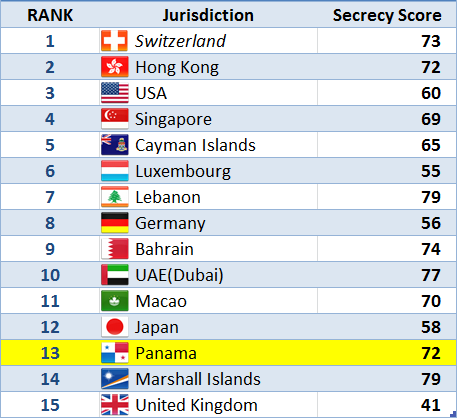
“I guarantee you we will not be found guilty of anything” Fonseca told Reuters. Such confidence is likely well-founded. The Panama Papers leak has quickly heightened awareness of the need for much better cyber security, but it has also triggered another discussion that is equally important: There is a clear difference between tax avoidance and tax evasion. Tax avoidance is generally described as legal manoeuvring to reduce one’s taxes, while tax evasion involves breaking the law to achieve the same end. Since the Great Recession of 2008, tax havens have been coming under heavier scrutiny. As the wealth gap continues to widen around the world, the masses are becoming less tolerant of the rich not paying their fair share of taxes. Some observers view this climate as the launch of an all-out assault on capitalism. After all, when corporations avoid taxes to maximise profits, they are simply fulfilling their fiduciary duty to shareholders. To decry that practice is to question the very underpinnings of globalisation and the capitalist system, argue many on the Right. A second argument advanced by this sector is that tax avoidance and even evasion are good for society because, contrary to popular opinion, they result in lower taxes for everyone else. Tax avoidance proponents, already weary of the moral harrumphing surrounding the Mossack Fonseca leak, argue that if politicians are as disdainful of avoidance as they claim, they alone have the power to write laws restricting it, yet they have failed to do so. Still, in Great Britain, a YouGov survey found that 62 per cent of people found legal tax avoidance “unacceptable.” It is, and has for a long time, been deeply entrenched in nations around the globe. The Guardian has reported that the Panama Papers shed new light on how Russian President Vladimir Putin’s inner circle used Mossack Fonseca to hide millions of dollars in a variety of schemes. Putin, in turn, has sought to deflect the attention, chiding U.S. President Barack Obama for looking the other way while corporations seek haven from taxes in the state of Delaware. Likewise, Fonseca told Reuters that it is cheaper to do business in Nevada than in Panama. The South American country ranked just 13th in the Tax Justice Network’s Financial Secrecy Index. The five most secretive nations, respectively, were Switzerland, Hong Kong, the United States, Singapore and the Cayman Islands.
Top 15 Jurisdictions of Financial Secrecy Index - 2015
Top 15 Jurisdictions of Financial Secrecy Index – 2015
The scandal threatens to overshadow the G8 summit on tax avoidance that David Cameron will host next month in London, a follow-up to a 2013 summit in Northern Ireland in which the prime minister vowed to crack down on the practice.

XL Catlin introduces enhanced marine cargo insurance

0
XL Catlin, through its Americas Marine business, has introduced an enhanced insurance policy to offer more comprehensive cargo insurance coverage on a domestic, foreign or worldwide basis – as its first new marine product. The new policy offering includes coverage extensions for land conveyance and warehouse/storage facilities, updated trade sanctions, enhanced terms for shipments made under a Letter of Credit, multinational coverage endorsements and new coverage extensions that address control of damaged goods, pairs and sets, brands and trademarks, recoopering and repacking, expediting expenses, exhibitions and special property floaters. XL Catlin’s Global Marine business provides insurance for clients with special coverage needs for their marine or offshore energy exposures, including Cargo, Blue Water and Brown Water Hull, P&I, as well as Excess and Primary Marine Liability. The new policy form is a market response to the complexity of managing cargo risks. According to the International Union of Marine Insurance (IUMI) – 2015 Cargo Statistics – Analysis, a number of factors are contributing to the increase in size and complexity of these risks. For instance, cargo theft is becoming more severe; there are larger accumulations of value on vessels and in ports, and companies must contend with more global compliance requirements. Anne Marie Elder the Chief Underwriting Officer of XL Catlin’s Americas Marine business said “To move assets, goods and products from point A to point B, businesses are contending with complex logistics, compliance issues and increasing threats of theft – to name a few.  This enhanced policy extends coverage to address cargo exposures that continue to grow in size and complexity.” “Cargo risks are complex enough. In redesigning our cargo policy form, we’ve taken the complexity out of the policy language and terms, clearly outlining critical policy information on an easy to read declarations page, key definitions and service level agreements,”  said Andrew D’Alessio, XL Catlin’s Americas cargo product leader in New York.

Apple vs. FBI: Narrow win for tech giant

The recent battle between Apple and the FBI over whether the tech giant should help it unlock the San Bernardino killer’s iPhone sparked a fascinating debate. It is a dilemma that the world has increasingly struggled with since Sept. 11, 2001: How much privacy should people be willing to sacrifice for the sake of security? The issue, in so far, as it relates to the iPhone case, has now been resolved. One day before U.S. Magistrate Sheri Pym was set to rule on the government’s motion to force Apple to help it unlock the encrypted iPhone of the killer Syed Farook, the Justice Department withdrew its motion because, it stated a third party had unlocked the phone instead. Nevertheless, the withdrawn motion raises perhaps an even more interesting question – who won, Apple or the FBI? Some would say it was Apple because they dug in their heels in their defence of privacy rights. They demonstrated their resolve to stand up for their customers, a hugely important gesture in the post-Edward Snowden world, in which U.S. cell phone carriers’ disturbing collusion with the National Security Agency was exposed. Designing software to help the FBI open the phone would set a terrible precedent, Apple argued, ultimately eroding their customers’ privacy rights. On the other hand, the FBI could be viewed as the winner because it accomplished its objective in accessing the phone’s contents to perhaps learn more about why Farook and his wife, Tashfeen Malik, gunned down 14 people in a medical centre, and to investigate what ties they might have had with other terrorists. The Bureau also sent a strong message to tech companies:
Cooperate with us or risk looking unpatriotic and soft on terror to the public.
What might look like a defeat for Apple – a third party managing to crack their encryption – could turn out to be a positive for the company if the case drives it to tighten its security. Many observers believe that the case has triggered, or perhaps shed light on, a form of arms race between tech developers and the government/hackers. While the San Bernardino battle is over, it remains to be seen whether the U.S. government will push further in its broader war with Apple. Publicly, the FBI maintained it only sought access to Farook’s iPhone, but in law enforcement agencies around the world, locked iPhones are collecting dust in evidence lock-ups. For years, Apple had been dutifully complying with government motions to unlock the phones under the federal All Writs Act but that changed in October 2015, when a federal judge in a Brooklyn (New York) drug case asked Apple whether such compliance was “burdensome.” Apple filed an argument accordingly, the magistrate ruled in their favour, and since then the company has been fighting the All Writs Act requests in cases around the country. In the Brooklyn drug case, Apple has until 15 April 2016 to respond to the government’s motion asking a District Court judge to overrule the magistrate. A senior law enforcement official recently told Time magazine, “We in law enforcement have been saying for a while now that we need to strike the appropriate balance between privacy and security, where we have a system of strong encryption that allows us to protect our data and our privacy, but also allows some way for law enforcement to go to a judge and get a court order to obtain information that can help us prevent and solve crimes.”