The Shipowners Mutual Protection and Indemnity Association of Luxembourg has pursued a matter against Containerships Denizcilik Nakliyat Ve Ticaret AS and Yusuf Cepnioglu.
The ultimate result of the action is that the English Court has upheld the anti-suit injunction that prevented a party to the action from pursuing direct rights of action against P&I Club in Turkey.
The court protected the Club’s contracted right to an English arbitration, as a priority to a direct right conferred in Turkish law. This was an important decision, as it brought the relationship between both English and foreign courts into greater focus.
As a result of the action, many questions were raised regarding the effect of European regulations on English principles when there is a conflict of law.
Back to the beginning
The action started as a result of the Yusuf Cepnioglu going aground at Mykonos back in March 2014. The vessel was a total loss, and cargo claims were made against the Turkish Charterers and Owners.
Arbitration against the Owners began in London, as well as proceedings against the Club in Turkey. Pursuing security for claims, they relied on a Turkish statute which gave the right to claim losses directly from the owners’ P&I insurer and the Club.
In return, the Club sought an order from the English Court to continue the existing anti-suit injunction and restrain the Turkish Charterer from continuing the action in Turkey.
It was argued by them that because the insurance contract had an English law arbitration clause, they could justifiably have the claim brought against them pursued through arbitration in London.
This had significant consequences, as under English arbitration the Club was entitled to rely on their “pay to be paid” clause as a defence to the claim. If the matter was pursued in Turkey, it was more likely the claim wouldn’t provide the defence needed to defeat the action.
The court’s decision
What the court needed to decide was whether, under English law, the right of direct action could enforce the contract between the Club and Owners.
Alternately, a claim could be pursued to enforce an independent right of recovery against the Club.
In the end, the court followed the approach taken during a 2014 action by the London Steam Ship Owners Mutual Insurance Association, against the Kingdom of Spain and Prestige No. 2.
They held that allowing the Turkish proceedings to continue would deprive the Club of their contractual right to have the arbitration held in London. From the Club’s standpoint, the Turkish proceedings were both vexatious and oppressive.
The anti-suit injunction was allowed to continue, preventing the Turkish Charterers from continuing their proceedings in Turkey.
To blow or not to blow? That is the question.
In a world where critical information is increasingly digitised and less secure, people who work in organisations where they know ethical or legal wrongdoing is taking place are more often facing the question of whether to blow the whistle or keep quiet.
The answer often lies in whether the wrongdoing is harming the public good or has the potential to do so, in the government’s eyes.
When the whistle-blower exposes conduct that the government believes is fraudulent or criminal, he is immune from termination.
According to the United Kingdom’s government, workers covered include employees, such as office or factory workers, police officers or NHS employees.
Such employees cannot be gagged by confidentiality agreements stipulated in settlements. Complaints protected by the UK’s whistle-blower laws include:
Criminal offences, e.g. fraud
A person’s health or safety is jeopardised
The environment has been harmed or is at risk of damage
The employer is violating the law in some way.
Sounds easy, right? You see something wrong and you blow the whistle by going to the government or the press. But there are risks. Even if the law seems to be on the whistle-blower’s side, employers can blackball the individual, making future employment in the field hard to find. Although the whistle-blower might be entitled to keep his job, the employer can make life on the job miserable (e.g. scheduling and work environment), or at least less than optimal.
But in the United States, such problems are sometimes mitigated by lucrative cash rewards paid by the government. The False Claims Act allows whistle-blowers who alert the government to fraudulent claims made against it, typically by federal contractors.
The law dates back to 1863 when Congress was concerned about contractors overcharging the Union Army for supplies during the Civil War, and was updated in 1986 to increase cash rewards whistle-blowers can receive from double to treble damages, and raise penalties from $2,000 per false claim to a range of $5,000 to $10,000 per claim.
In 2012, four whistle-blowers shared a $250 million payout (£161 million) for exposing fraud by Britain’s biggest pharmaceutical maker, GlaxoSmithKline. Because the U.S. government buys so much medicine from Glaxo, its Department of Justice fined the company about $3 billion for allegedly giving doctors gifts, such as getaway vacations to exotic locales, in exchange for their agreements to prescribe its drugs to patients for whom the U.S. Food and Drug Administration had not given approval.
The UK, in 2014, considered offering such cash incentives to whistle-blowers but ultimately decided against it, concluding they have no real impact on the amount of whistleblowing that takes place.
But what happens when the question of wrongdoing is not so cut and dried? In the WikiLeaks case, former US Army Private First Class Bradley Manning, an intelligence analyst, was sentenced to 35 years in prison in 2013 for leaking classified information.
National Security Agency contractor Edward Snowden is living in exile in Russia to avoid facing trial in the United States for his disclosure of classified documents to WikiLeaks founder Julian Assange.
While the government is incredibly angry with Manning and Snowden, some people consider them national heroes, especially Snowden, who has exposed the government’s highly controversial program where innocent civilians’ communications was subjected to surveillance in its war on terror.
German insurance company ERGO has entered the growing Thai market by acquiring 40% of Thaisri Insurance.
The German company made the purchase in late May, in a strategic move to strengthen their presence in a key Asian market and to further pursue international growth.
Thailand’s non-life insurance market offers excellent growth opportunities at the moment, for investors and insurers from other nations seeking to expand their reach.
At present, premiums are expected to rise by 7% each year between 2016 and 2020, making the Thai market highly profitable. What’s more, net combined ratios remain in the low 90s.
Within this growing market, Thaisri specifically offers a wide range of options, including property-casualty insurance and products that focus on motor and property insurance.
The Thai insurance company reported a record income in 2015, equivalent to €50 million, with €8.9 million in profit. They now have 450 employees and 70 offices and service centres nationwide. Such a growing, successful company makes an excellent investment for ERGO.
With this transaction completed, ERGO now has a 40.26% stake in Thaisri, with the company’s founders retaining a majority 59.7% share. Wrapping up the deal relies on the usual regulatory approval.
Japanese Sompo Insurance Group has launched a model for evaluating risks to onshore and offshore wind farms.
As the price for energy has steadily increased, many countries around the world are turning to wind as a viable option for producing electricity on a large scale.
The potential of wind turbines, which convert the kinetic (mechanical) energy into electrical energy, is enormous but comes with significant risks.
The model, created by Sompo in collaboration with the University of Tokyo, will provide pricing and catastrophe modelling data for insuring the construction and operation of wind turbines.
Taking into account perils such as wind, lightning, wave, and electrical and mechanical breakdown, the model will provide valuable risk insights to insurers as well as renewable energy companies.
Sompo stated that it is the first such model to be launched. It will initially cater for risks in Japan and then followed by the North Sea and Asia markets later in the year.
Marek Shafer, Head of Catastrophe management at Sompo’s Lloyd’s unit, Sompo Canopius, said: “The quantitative evaluation of risks associated with wind farms is still in its infancy and the development of this model is an important step forward.”
The launch comes few weeks after the Paris Climate Agreement (COP21) where more than 170 countries signed a historic agreement to combat climate change and to accelerate the actions and investments needed for a sustainable low carbon future.
Indeed, the call for increased investments is likely to boost the sales of wind turbines over the coming years according to Moody’s Investors Service
And as such the model comes along at the right time
German insurer Allianz has agreed to acquire Moroccan insurance unit, Zurich Assurances Maroc, from Zurich Insurance Group, the insurer said on Friday.
Zurich Assurances Maroc is currently the seventh largest insurance company in Morocco. The company generated around 114 million Euros (£88 million) in gross premiums written last year, serving more than 600,000 customers in the Kingdom. The company also has a license for life and health insurance products, which Allianz plans to exploit.
Allianz will pay 244 million euros (£189 million) to Zurich once regulatory approvals have been finalised. The transaction is expected to close end of 2016
This transaction enables Allianz to make a remarkable entry into the insurance sector in Morocco and capture future growth in the Africa region. Morocco is Africa’s second largest insurance market after South Africa.
“This deal is a major milestone for our strategy to expand in Africa. Morocco presents good growth prospects for both personal and commercial lines.” said Sergio Balbinot, board member of Allianz SE in charge of southern and western Europe, Africa, MENA and India.
The German group will, however, face stiff competition in a market dominated by the likes of Saham Insurance, Wafa Assurance, RMA Watanya and the French behemoth AXA.
The deal follows a similar agreement with Taiwan-based Hotai Group to acquire Zurich’s general insurance operations in Taiwan.
In a statement, Zurich explained that the “hard” decision to sell its Moroccan subsidiary was taken after a thorough examination which revealed that there is limited potential to achieve operating scale to justify continued investment of capital and management resources.
Despite the growth potential of the Moroccan market, Zurich ruled that other companies were best placed to manage these businesses.
In 2015, Allianz achieved a turnover of 125.2 billion euros (£95 billion), for a net profit of about 6.99 billion euros. The group has 142,000 employees serving more than 85 million customers across 70 countries.
Zurich Insurance, Switzerland’s largest insurer has been shocked and shaken by the suicide of their former CEO, Martin Senn. It comes less than three years after their Chief Financial Officer, Pierre Wauthier, also committed suicide.
Martin, who was 59, was the company’s Chief Executive Officer between 2010 and 2015; he resigned in December last year after a takeover bid for British insurer RSA that failed, and a series of profit warnings.
Martin Senn former Zurich Insurance CEO
Mr. Senn’s family informed the insurer of his death, and they have remembered him as commendable, well liked and valued.
Mr. Wauthier’s and Mr. Senn’s deaths had prompted an enquiry into how much pressure is being placed on employees at companies such as Zurich Insurance, but family members have been critical of whether anything has been done to improve company morale.
Going back to Mr. Wauthier’s death, he actually named then-chairman Josef Ackermann in his suicide note and blamed his death on his demoralisation with the aggressive route the insurer was taking and his inability to “switch off” at the end of the workday.
The business community in Switzerland has been rocked by both men’s deaths, especially given the fact that there has been a string of similar suicides in the past few years. In total, five executives from some of Switzerland’s biggest companies have taken their own lives in the past eight years. With the passing of Mr. Senn, a disturbing pattern is beginning to emerge.
With finance and insurance professions throughout the world being notoriously high-stress, one must ask if what’s happening in Europe could occur in other key markets as well.
In the United Kingdom, the British Journal of Psychiatry published a report in 2014 that showed the recent financial crisis was a factor in at least 10,000 suicides.
What’s more, experts from the University of Oxford and London School of Hygiene and Tropical Medicine noted suicides across Europe increased by 6.5% between 2007 and 2009, at the height of the crash. This number remained higher than average all the way until 2011.
Cargo theft throughout Europe is on the rise. Nearly $23 billion USD (£16 billion) in losses were reported last year, with a large portion of them taking place in the United Kingdom and the Netherlands, according to a BSI’s 2015 Global Supply Chain Intelligence report.
Various supply chain threats and security concerns have contributed to the increase in trade disruption and thefts. Incidents such as the Paris terrorist attacks in November 2015 resulted in losses of $3.5 million USD (£2.4 million) for the Belgian shipping industry, according to that same BSI report, and also served to highlight the links between terrorism and the supply chain.
Terrorist smuggling rings have also been working together between Spain and the Middle East. Together, they facilitate the illegal transport of stolen electronics, weapons, drugs and other contraband items.
Besides Spain, notable numbers of cargo theft related incidents also occurred in Italy and France; however, the UK and the Netherlands reported the highest number of cargo thefts in the first quarter of 2015. Both countries are under threat from well-organised cargo crime gangs who are becoming increasingly violent to gain access to goods.
Shockingly, the Transported Asset Protection Association for Europe, the Middle East and Africa (TAPA EMEA) has data which indicates more than 67% of all cargo thefts or attempts in Europe during the first quarter of 2015 took place in the two nations, and just 18 of the incidents made for a loss of €100,000. During that time, the UK reported 70 cargo-related crimes, an increase of 133% over the first quarter (Q1) of 2014. In the Netherlands, the rise was 17% over Q1 in 2014.
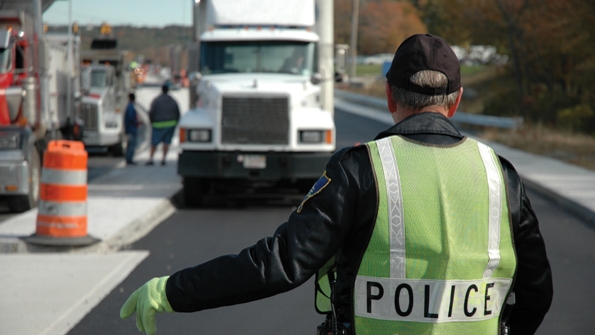
police officer stopping a cargo truck
Mitigating the risks
A number of measures exists which shipping companies, lorry drivers and cargo facilities can undertake to help reduce the amount of cargo-related crimes happening throughout Europe.
First, trucks can utilise GPS tracking to determine their location at all times. This is especially useful if they are stolen. Additional geo-fencing solutions can also help by setting off alarms if vehicles go off-route or enter known high-risk areas.
There are a number of companies around the world working along the industry to provide telematics solutions. One company in particular named Orbcomm Inc. has just won an award from the Connected World magazine for developing solutions to minimise cargo thefts. The company’s solutions are designed to remotely track, monitor and control both mobile and fixed assets for those who work in transportation and distribution.
Other GPS tracking solutions come are provided by companies such as Fleetmatics that provide real-time tracking, alerts and Geo-fences. Trailermatics, a telematics trailer expert offering GPS tracking on containers and swap bodies.
Within cargo vehicles, a number of different locking mechanisms can also be deployed to help secure the vehicles and its cargo. Furthermore, air brake valve locks that prevent the release of vehicles park brakes can also be installed in addition to the locks and seals on doors. These tools are highly recommended by the Cargo Security Alliance.
All shipping professionals can also play their part by staying alert, whether on the road or working in a cargo storage facility. Look out for signs that a building is under surveillance, such as people loitering around the perimeter taking notes or photos, or vehicles following trucks.
Being aware of the details of the supply chain can also help reduce opportunities for theft. From pick up to collection, knowing who is scheduled to handle each aspect of a shipment and verifying identification before releasing a load is essential. Furthermore, maintaining good communication with everyone involved, monitoring delivery schedules, reviewing security procedures and expecting how many stops cargo will make along its route will all help reduce the likelihood of theft.
Even the most basic safety procedures go a long way towards helping cut down on cargo-related crime. Maintaining well-lit facilities, keeping trucks locked, parking in an organised way and ensuring alarms are working are imperative steps towards increasing cargo security.
Finally, when hiring new employees involved with any aspect of shipping, from working within a warehouse to driving a lorry, rigorous screening must be implemented. Screening and training employees can help weed out potential “inside jobs”.
Working towards theft reduction
While it’s extremely difficult to eliminate cargo theft in Europe, being vigilant and taking every step possible to protect shipments will go a long way towards reducing the number of incidents. There are many businesses and organisations who are dedicated to providing a variety of security solutions for the shipping industry.
With better understanding of the problem, in-depth pre-screening and increased security measures, issues regarding cargo crime may start to decrease instead of rising throughout the remainder of 2016 and beyond.
Building on the requirements of the new European Network Information Security Directive, the Association of British Insurers (ABI) is now calling for the creation of a central UK database of cyber incidents. They are advocating that by doing so, insurers throughout the United Kingdom can tackle the current lack of data and help to properly price cyber risk.
Information sharing of this magnitude is crucial for putting the UK at the head of a £14 billion ($20 billion) global market, and better enables the cyber insurance market to grow. Accordingly, it would provide more choice for businesses of all sizes.
The ABI believes that this information is needed urgently to better tackle cyber security, as three out of four SME firms are now reporting security breaches.
Creation of the cyber incident database would be anonymous, and allow businesses and insurers to record details of incidents involving businesses around the UK. While other countries like the US track cyber crimes on a state-by-state basis, this would be the first national database of its kind. It would position the UK as a world leader in cyber insurance.
The database would be a not for profit venture, and the types of cyber crimes detailed within would include business interruption losses, ransom demands, loss of confidential data and even damage to IT systems.
By building the database on the recommendations set out in the European Network Information Security Directive, which states that certain firms must provide notification of cyber incidents from 2018 onwards, anonymous data will be more accessible to insurers.
This data will be used to improve pricing and could potentially drive market growth. Because it would be a world first, it would put the UK in prime position as the global cyber insurance leader.
Cyber losses are still being underestimated, despite the fact they’re the biggest threat to the UK’s world leading digital economy. Therefore, more absolutely must be done to tackle the problem. Cyber crime is, at present, the biggest insurable risk the industry is facing, and it’s critical to the economy.
Without enough data, insurers won’t have the information needed to provide the appropriate coverage. This is a huge inhibitor to being at the core of the global market.
This proposal must be mandated by parliament. It must also be proportionate and manageable in order to remain truly effective. Suggesting it follows on from the ABI’s recent guide, Making Sense of Cyber Insurance.
Cyber crimes are hitting even small businesses in the UK, and include phishing and spear phishing emails and malware attacks that can cause significant losses and upset. It is time that businesses gain advice and guidance from the government and the insurance industry on how to become more resilient in the face of this threat.
The Prudential Regulation Authority (PRA) is proposing a supervisory statement that sets out a new approach to monitoring model drift, in line with Solvency II. Within the proposal are new expectations for firms with approved internal models, relating specifically to their reporting formula and Solvency Capital Requirement (SCR).
Part of the new, proposed approach is that firms with internal models will privately report their SCR annually, using a template provided. By doing so, it is hoped that it will be simpler for firms to provide this information.
The Consultation Paper details that the proposal will be relevant to all solo insurance and reinsurance undertakings within the scope of Solvency II, the directive making a provision that when relevant SCR is calculated using an internal model, it must be approved by a supervisory authority.
Risk is created when models evolve over time. Capital levels subsequently drift downwards and fail to reflect the risk on the system.
The new expectations on the internal model will require firms to report their results of the SCR calculations to the PRA. From there, the PRA will use the information to monitor model drift and measures of risk.
The consultation closes on Wednesday 17 August 2016. Comments and enquiries should be to CP22_16@bankofengland.co.uk
Pandemics. Just the word is enough to strike fear in the hearts of many. They are a significant threat to our global health security, economic security and ability to end extreme poverty around the world. They also hinder the ability to achieve sustainable development goals.
Outbreaks of disease are unfortunately inevitable in many parts of the world, but if they are addressed promptly pandemics are often preventable. What makes this easy is having money at the right time to save both lives and economies in many countries around the globe.
The recent Ebola crisis in parts of West Africa is a perfect example of why having funds supplied promptly is so essential. With no quick disbursement of significant funds, especially in nations with constrained resources, epidemic outbreaks simply cannot be tackled effectively and stopped before they escalate even further.
Under the present system, global financial aid is not supplied until major outbreaks are already at the point where they are ready to explode. With no strong system in place to tackle outbreaks before they get this severe, the planet just keeps moving from one crisis to the next.
The World Bank’s response
In the wake of the horrendous Ebola crisis, the World Bank worked with expert panels to investigate what more could be done, and how financial support could be provided in a more expedient manner in the wake of potential pandemics.
It has been recognised that the financing gap is especially critical at the early stages of an outbreak, and that assistance must be provided when the crisis level is set to rise. To this end, the World Bank is partnering with the World Health Organisation and other private and public sector partners to develop a Pandemic Emergency Financing Facility.
This new campaign will enable them to provide a significant surge of funding in a much quicker manner for response efforts that help prevent the spread of rare, severe diseases. It will also provide aid to qualified international agencies involved in the response to a major outbreak in the affected countries. This will aim to stop them before they are even more deadly and costly.
The pandemic problem
Sadly, pandemics are one of the biggest uninsured risks in the world today. Experts have even estimated there is a significant chance that a severe outbreak will occur in the next 10 to 15 years, which will destabilise societies and their economies.
The shocking global cost of a moderate to severe outbreak at the moment is $570 billion (£400 billion), or approximately 0.7% of global income. Think back to the Spanish Influenza Epidemic of 1918; a pandemic that size would today cost approximately 5% of the global economy.
Who will benefit
Lower income nations will benefit from this new pandemic funding initiative; those with weaker health systems that are more vulnerable to outbreaks and less able to cope with the consequences.
Financing for the initiative will come from the IDA, a World Bank Group fund designated for the poorest countries on earth. It will come in part from insurance and in part from cash, obtaining funding from resources such as the reinsurance market and proceed from catastrophe bonds.
It will cover the outbreak of infectious diseases like Influenza A, B and C, SARS, MERS, Ebola and Marburg. It will also cover outbreaks of zoonotic diseases such as Crimean Congo, Rift Valley and Lassa fever.
The maximum coverage available will be $500 million (£350 millions) for 3 years. There will also be a replenishable cash window at $50 to $100 million US dollars.
The Goal
The essential goal of this new World Bank initiative is that quicker provisions of resources will translate to stemming outbreaks before they reach pandemic proportions. Financing will be triggered when outbreaks in the poorest nations reaches specific criteria related to their severity.
The Pandemic Emergency Financing Facility is expected to be up and running by late 2016.